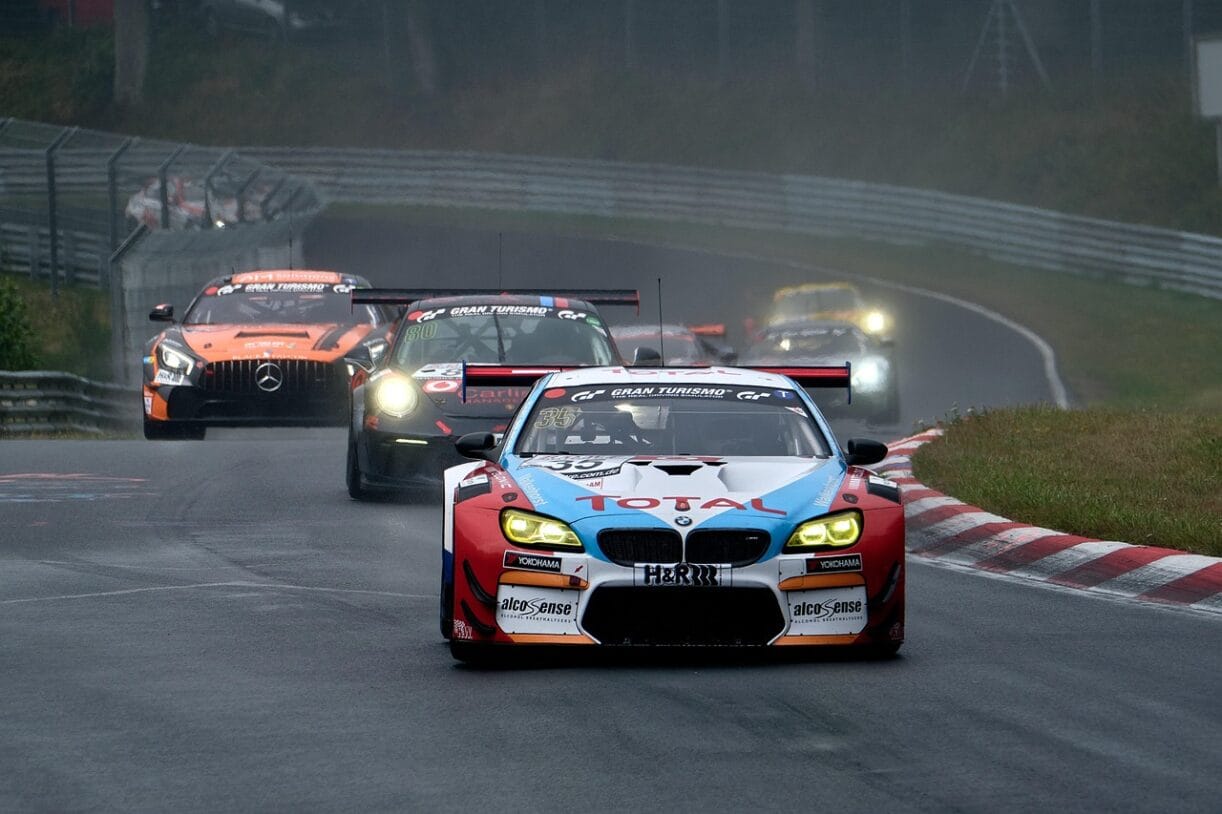
If you want the short version, these are my three favorite lenses for race track photography. They offer the best combination of autofocus speed, reach, image quality, and value depending on your camera system.
🏆 Best Overall
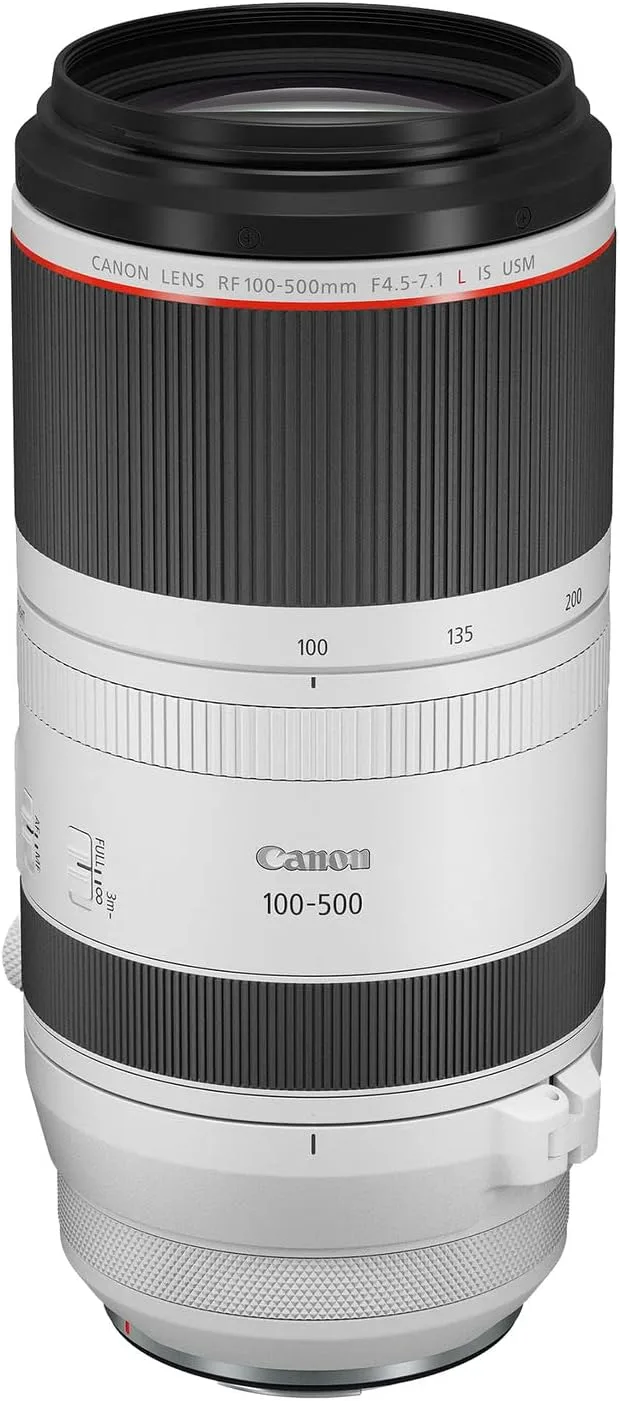
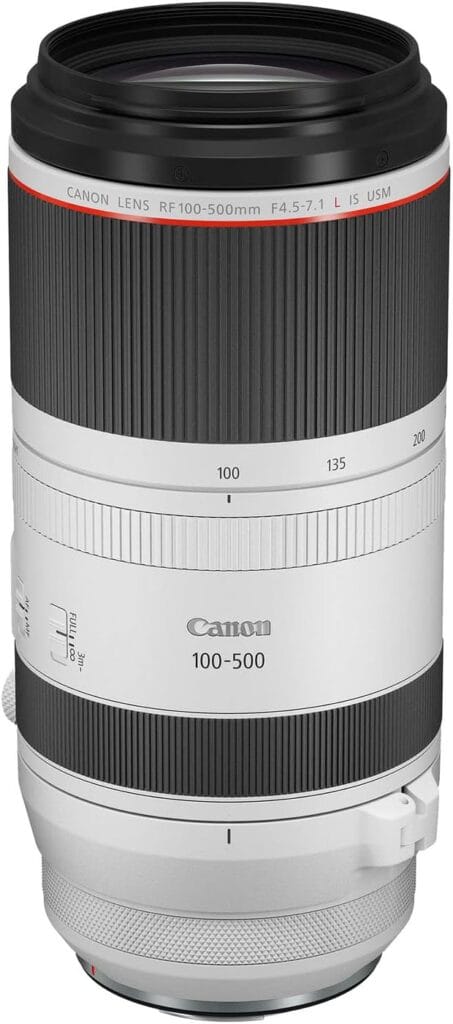
Canon RF 100-500mm f/4.5-7.1 L IS USM
Outstanding autofocus, excellent image stabilization and a versatile focal range make this one of the best race track lenses available for Canon RF shooters.
📷 Best for Nikon Z
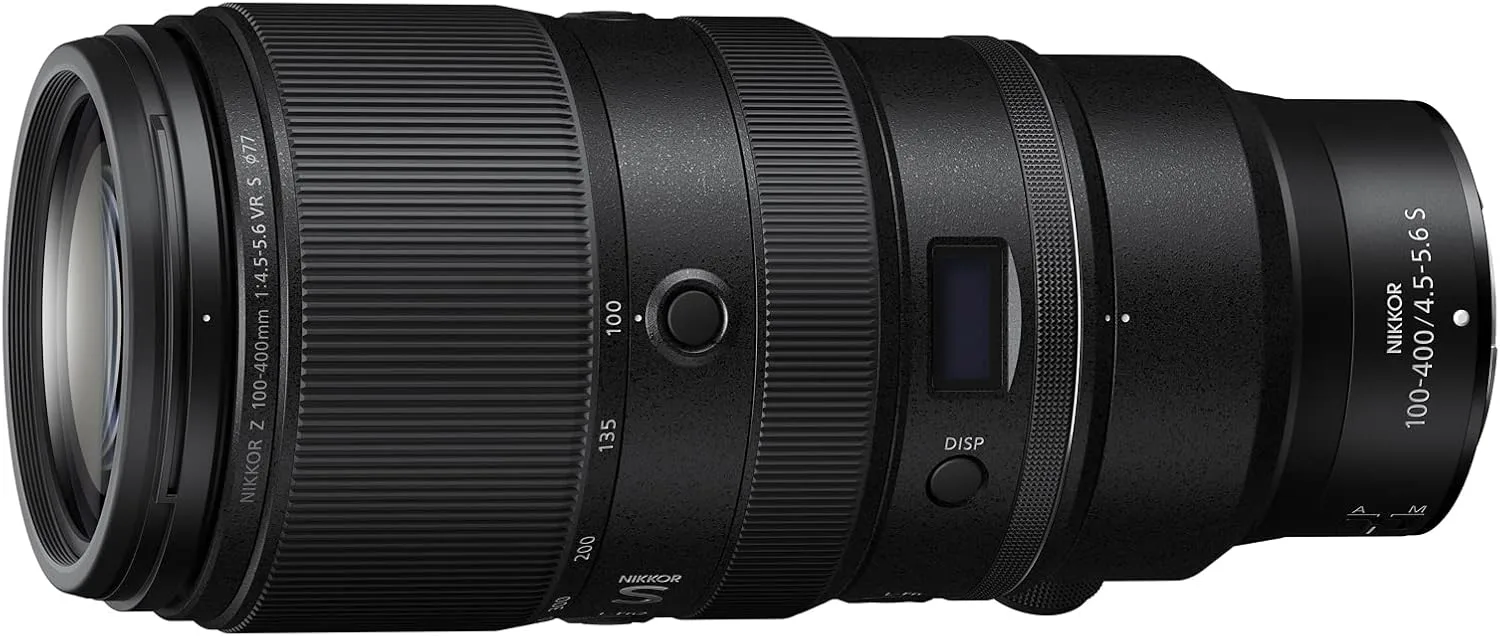
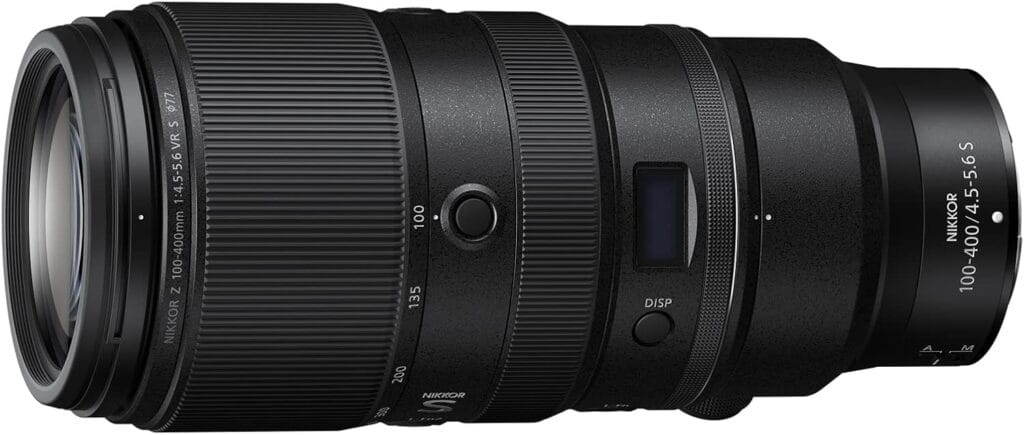
Nikon Z 100-400mm f/4.5-5.6 VR S
A professional S-Line telephoto zoom with incredibly fast autofocus and superb sharpness. Perfect for motorsports photographers using Nikon Z cameras.
💰 Best Value
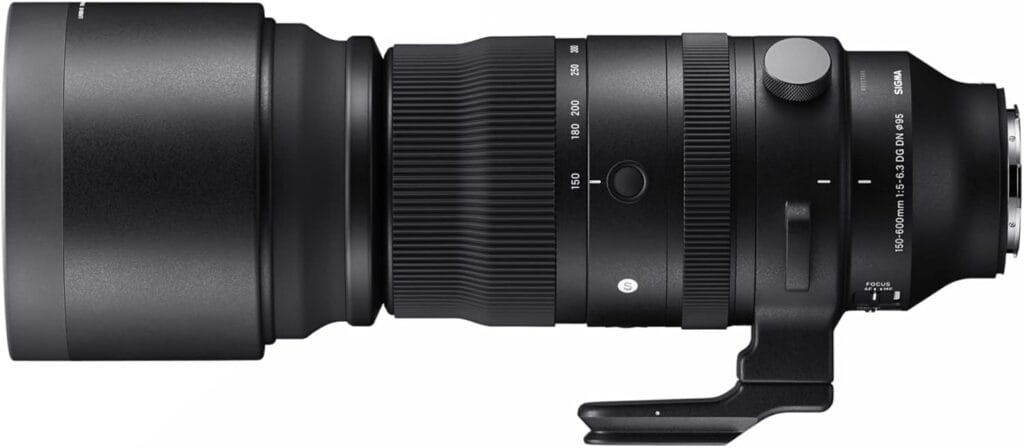
Sigma 150-600mm f/5-6.3 DG DN OS Sports
If maximum reach matters, the Sigma 150-600mm delivers outstanding performance for the money and is ideal for photographing distant sections of the track.
“`
Race track photography is demanding. Cars move fast, lighting changes constantly, and you often can’t get close to the action. The lens you use will make or break your shots. This guide covers the best lenses for race track photography, what to look for, and how to match a lens to your needs and budget.
Why Lens Choice Matters at the Track
At a race track, you’re usually far from the cars. Even at smaller club events, the closest you can get might be 20 to 30 feet. At major races like Formula 1 or NASCAR, you could be 100 feet or more away.
That distance means you need reach. But reach alone isn’t enough. You also need:
Fast autofocus – Cars move at 100+ mph. Slow AF means missed shots.
Wide maximum aperture – Tracks often have shaded corners and overcast skies.
Image stabilization – Helps when panning, though some photographers turn it off for panning shots.
Good build quality – You’ll be standing outside for hours in all conditions.
Get any one of these wrong and your keeper rate drops fast.
What Focal Length Do You Need for Race Track Photography?
Most race track photographers use lenses in the 100mm to 600mm range. Here’s a rough breakdown:
70–200mm – Good for wide shots showing cars in context, pit lane shots, driver portraits, and wide panning shots. Not enough reach for cars on track from most spectator areas.
300–400mm – The sweet spot for many track photographers. Enough reach for most circuits, still manageable to handhold, and autofocus is usually fast at this range.
500–600mm – Needed for circuits where you’re far from the action, like large ovals or certain F1 tracks. Heavy and expensive, but gives you options other lenses can’t.
150–600mm zoom – Popular choice because it covers everything in one lens. Trade-off is maximum aperture, which is usually f/5.6 to f/6.3 at the long end.
Best Lenses for Race Track Photography
1. Canon RF 100-500mm f/4.5-7.1 L IS USM
This is one of the best zoom lenses for race track photography if you shoot Canon. The focal range covers almost every situation you’ll encounter at a circuit.
Autofocus is excellent – it tracks moving subjects well and handles the contrast transitions you get when cars move through light and shadow. The image stabilization system is effective and works well when panning.
The downside is that maximum aperture at 500mm is f/7.1. In good light this isn’t an issue. On overcast days or in shadowed sections, you’ll need to push ISO higher.
Best for: Canon RF shooters who want one lens that does everything at the track.
Approximate price: $2,700–$3,000 new.
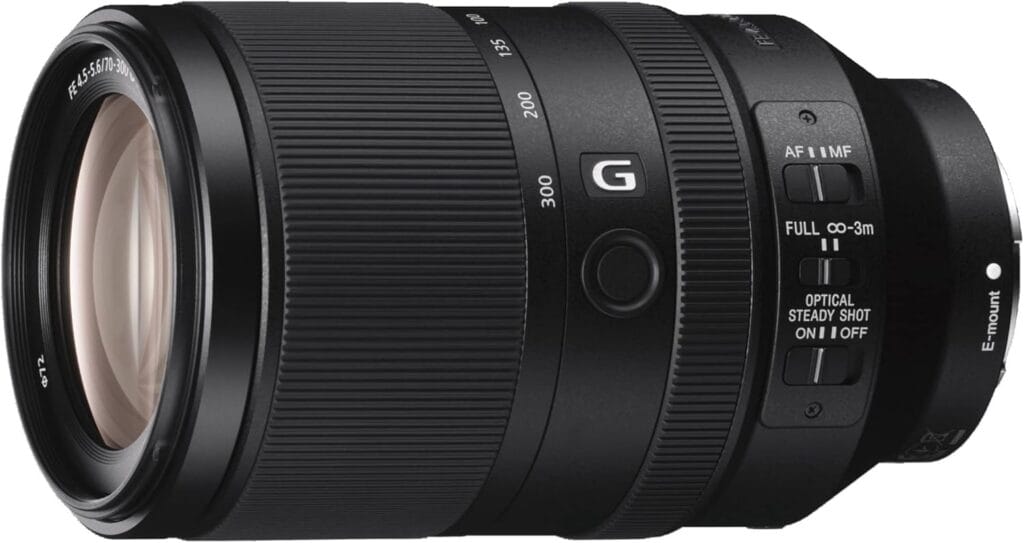
2. Sony 100-400mm f/4.5-5.6 GM OSS
Sony’s G Master 100-400mm is a strong choice for race track photography. At 400mm and f/5.6, you have enough reach and light-gathering for most tracks.
Autofocus on Sony bodies with this lens is outstanding. The Eye AF and subject tracking systems translate well to vehicle tracking, and the system rarely hunts or loses a subject mid-burst.
Image quality is sharp across the range, and the OSS (optical stabilization) system helps during long shooting sessions. It pairs well with the Sony 1.4x teleconverter for extra reach when needed.
Best for: Sony E-mount shooters who want sharp, reliable AF and excellent image quality.
Approximate price: $2,500 new.
3. Nikon Z 100-400mm f/4.5-5.6 VR S
For Nikon Z shooters, this is a top option at the race track. The S-line build is solid, AF is fast using the EXPEED 7 chip in newer Z bodies, and the 400mm focal length covers most track situations.
The vibration reduction system is effective. At 400mm, the 5.6 maximum aperture is manageable in decent light. Pair it with the Z 1.4x teleconverter and you get a 560mm f/8 option for more distant subjects.
Best for: Nikon Z shooters wanting a professional-grade zoom.
Approximate price: $2,700 new.
4. Sigma 150-600mm f/5-6.3 DG DN OS Sports
The Sigma 150-600mm Sports is the most popular third-party option for race track photographers. It’s available for Sony E-mount and L-mount, and offers exceptional reach at a price far below first-party options.
At 600mm, you can capture cars from positions where other lenses simply can’t reach. The Sports version has a solid build, good weather sealing, and reliable autofocus.
The main compromise is size and weight. At nearly 2.4kg, it’s heavy to handhold for a full day. Many photographers use a monopod with this lens at the track. Maximum aperture of f/6.3 at 600mm also means you’ll need more light or higher ISO in dim conditions.
Best for: Photographers who need maximum reach on a budget, or those shooting at tracks where cars are very distant.
Approximate price: $1,400–$1,600 new.
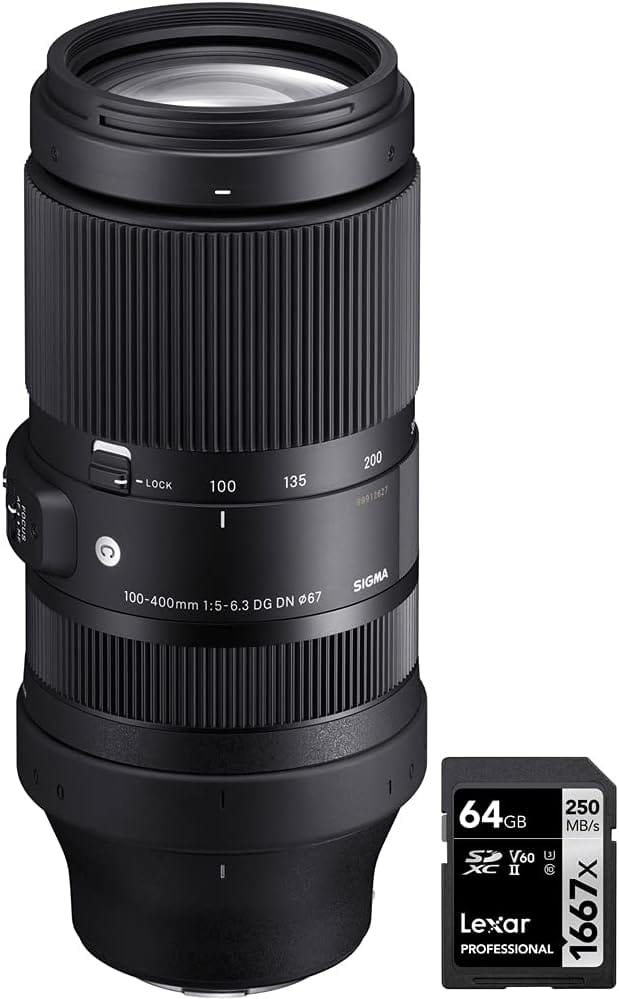
5. Sigma 100-400mm f/5-6.3 DG DN OS Contemporary
If the 150-600mm Sports is too heavy, the Sigma 100-400mm Contemporary is a lighter and cheaper option. It covers most track situations, weighs around 1.1kg, and produces sharp images.
Autofocus is decent but not class-leading. On Sony bodies with good PDAF coverage, it performs better than on bodies with older AF systems. For photographers starting out in motorsport photography, this is a great entry point.
Best for: Budget-conscious photographers or those who prioritize portability.
Approximate price: $800–$950 new.
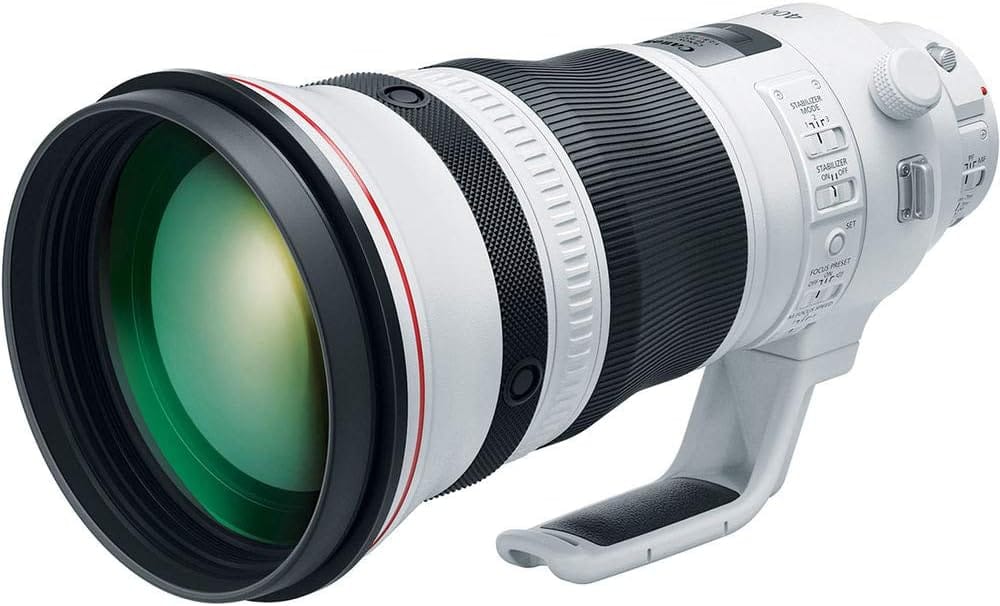
6. Canon EF 400mm f/2.8 L IS III USM (and similar prime lenses)
Fast telephoto primes are what professional motorsport photographers use. A 400mm f/2.8 gives you two to three stops more light than a 400mm f/5.6 zoom. That means faster shutter speeds, cleaner images at base ISO, and more creative background separation.
The downsides are obvious: these lenses are expensive (often $10,000+) and heavy. But if you’re serious about motorsport photography and shoot professionally, a fast prime delivers results that zooms can’t match.
Similar options include the Nikon Z 400mm f/2.8 TC VR S and Sony 400mm f/2.8 GM OSS. All are exceptional. All cost a lot.
Best for: Professional photographers or serious enthusiasts with big budgets.
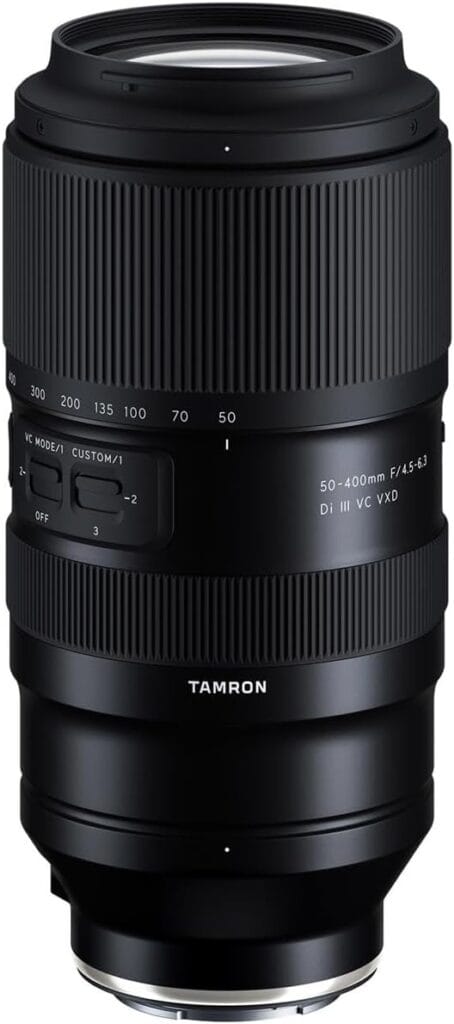
7. Tamron 50-400mm f/4.5-6.3 Di III VC VXD (Sony E-mount)
This lens is an interesting option for race track photography because the wide end starts at 50mm. That means you can capture wide establishing shots and then zoom in for close action without swapping lenses.
Image quality is good, AF is solid on Sony bodies, and the price is reasonable. The 400mm focal length won’t be enough at every track, but for most club-level events and many professional circuits, it works well.
Best for: Photographers who want flexibility and don’t need more than 400mm.
Approximate price: $850–$1,000 new.
Fixed vs. Zoom: Which Is Better for Track Photography?
Most photographers use zooms at the track because they’re flexible. You might be shooting a tight corner from 30 feet one minute and a long straight from 200 feet the next. A zoom lets you adapt.
Fixed (prime) lenses give you better maximum aperture and often sharper results. But at the track, you’re frequently repositioning and waiting for different angles. A prime forces you to work with one field of view, which can be limiting.
The practical answer for most photographers: a zoom in the 100-400mm or 150-600mm range. If you’re a working professional or shooting at a specific location where you know the distances, a prime makes more sense.
What About Teleconverters?
Teleconverters extend your focal length but reduce maximum aperture. A 1.4x teleconverter cuts light by one stop; a 2x cuts two stops.
At the track, a 1.4x teleconverter on a 100-400mm gives you 140-560mm. That’s genuinely useful. Autofocus performance usually holds up well with a 1.4x on modern camera systems.
A 2x teleconverter is harder to recommend. Autofocus often struggles at f/8 or slower, and image quality can suffer. Use it only when you have no other choice.
Only use first-party or well-matched third-party teleconverters. Mismatched combinations often fail to autofocus properly.
Image Stabilization: On or Off When Panning?
Panning is the most common technique in motorsport photography. You follow the car with your camera at a slow-ish shutter speed (often 1/200s to 1/500s), which keeps the car sharp while blurring the background.
Most modern IS systems have a panning mode that stabilizes up-and-down movement but allows horizontal movement. If your lens has this mode, use it when panning.
If your lens only has one IS mode, test it. Some photographers find IS actually hurts panning because the system fights the intentional horizontal movement. In that case, turn it off.
Autofocus System Requirements
Your lens matters, but so does your camera body. Modern mirrorless cameras from Canon (R3, R5, R6), Sony (A9 III, A7R V, A7 IV), and Nikon (Z9, Z8, Z6 III) have subject tracking systems that work very well for vehicles.
If you’re shooting DSLR, the Canon 1DX Mark III and Nikon D6 are still capable systems. But mirrorless AF, especially for subject tracking, has moved ahead.
When buying a lens for track photography, check that it’s compatible with your body’s subject tracking system. Some third-party lenses work well; others don’t play nicely with the body’s AF algorithms.
Practical Tips for Race Track Photography
Use a monopod. Long heavy lenses get tiring after a few hours. A monopod lets you rest the lens weight while still moving quickly.
Shoot in burst mode. Cars move fast. Even at 10–20 frames per second, you need to time your burst right. Don’t just hold the shutter; time it so the car is in a clean position in the frame.
Learn the track. Know where the cars brake, where they accelerate, and where the light is good. The best spots at any circuit aren’t always the most obvious ones.
Mind the fence. Most spectator areas have catch fences. Get your lens as close to the fence as possible and use a wide aperture to blur it out. At f/4 or f/5.6 with a long lens, fences mostly disappear.
Set your shutter speed deliberately. Full freeze of a car (1/2000s or faster) looks static. Panning with a slower speed (1/200s–1/500s) conveys speed. Both are valid. Know which look you want before you shoot.
Budget Breakdown: What You Can Expect at Each Price Point
Under $1,000: Sigma 100-400mm Contemporary, Tamron 100-400mm (for DSLR). Good results are possible but AF may be slower and build quality lower. Fine for learning.
$2,000–$3,500: Canon RF 100-500mm, Sony 100-400mm GM, Nikon Z 100-400mm. Professional-grade results, excellent AF, good weather sealing.
$5,000+: Fast telephoto primes, Canon RF 70-200mm f/2.8 plus a long prime combination, supertelephoto zooms. For working professionals.
Renting vs. Buying
If you’re shooting at a specific event and don’t want to commit to a purchase, renting is a smart option. Services like LensRentals, BorrowLenses, and local camera shops often carry professional motorsport lenses.
Renting a 400mm f/2.8 for a weekend costs a fraction of buying one. It’s a good way to test a lens before committing or to upgrade for a special occasion.
Recommended Starter Setup for Race Track Photography
If you’re just getting into motorsport photography and want a practical, affordable setup:
A Sony A6700 or similar APS-C mirrorless body with the Sigma 100-400mm Contemporary gives you a reach equivalent to 150-600mm in full-frame terms on an APS-C sensor. The crop factor works in your favor at the track.
For full-frame shooters on a budget, a Nikon Z6 II or Sony A7 IV paired with the Sigma 150-600mm Sports gives you a capable setup well under $4,000 total.
Final Thoughts
The best lens for race track photography depends on what you’re shooting, where you’re positioned, and what you can carry. For most people, a zoom in the 100-400mm or 150-600mm range is the right answer. It gives you flexibility, enough reach for most circuits, and autofocus that can handle fast-moving subjects.
If budget allows, go with first-party options from Canon, Sony, or Nikon. If you need to save money, Sigma and Tamron both make lenses that perform well at the track.
And if you’re just starting out, don’t overthink it. Get out to a track with whatever you have, learn the angles and timing, and then make decisions about gear based on what you actually find yourself needing.
This article covers lenses compatible with current mirrorless and DSLR systems from Canon, Nikon, Sony, and Sigma/Tamron. Prices are approximate and may vary by region and retailer.
Top Picks: Best Lenses for Race Track Photography
If you want the short version, these are my three favorite lenses for race track photography. They offer the best combination of autofocus speed, reach, image quality, and value depending on your camera system.
🏆 Best Overall
Canon RF 100-500mm f/4.5-7.1 L IS USM
Outstanding autofocus, excellent image stabilization and a versatile focal range make this one of the best race track lenses available for Canon RF shooters.
📷 Best for Nikon Z
Nikon Z 100-400mm f/4.5-5.6 VR S
A professional S-Line telephoto zoom with incredibly fast autofocus and superb sharpness. Perfect for motorsports photographers using Nikon Z cameras.
💰 Best Value
Sigma 150-600mm f/5-6.3 DG DN OS Sports
If maximum reach matters, the Sigma 150-600mm delivers outstanding performance for the money and is ideal for photographing distant sections of the track.
George Margas is the founder and lead content creator at 335mm.com. With over a decade of experience in photography and a keen interest in optical technology, George combines technical expertise with practical insights to help photographers make informed decisions about their gear. As the owner of gemweb media agency, he brings a unique perspective on digital content creation and the evolving landscape of visual media. When not writing about lenses or testing the latest camera equipment, George can be found exploring new photography techniques and sharing his knowledge through workshops and online tutorials.
We use cookies to personalise content and ads, to provide social media features and to analyse our traffic. We also share information about your use of our site with our social media, advertising and analytics partners. View more
Suggested text: When visitors leave comments on the site we collect the data shown in the comments form, and also the visitor’s IP address and browser user agent string to help spam detection.An anonymized string created from your email address (also called a hash) may be provided to the Gravatar service to see if you are using it. The Gravatar service privacy policy is available here: https://automattic.com/privacy/. After approval of your comment, your profile picture is visible to the public in the context of your comment.
Media
Suggested text: If you upload images to the website, you should avoid uploading images with embedded location data (EXIF GPS) included. Visitors to the website can download and extract any location data from images on the website.
Cookies
Suggested text: If you leave a comment on our site you may opt-in to saving your name, email address and website in cookies. These are for your convenience so that you do not have to fill in your details again when you leave another comment. These cookies will last for one year.If you visit our login page, we will set a temporary cookie to determine if your browser accepts cookies. This cookie contains no personal data and is discarded when you close your browser.When you log in, we will also set up several cookies to save your login information and your screen display choices. Login cookies last for two days, and screen options cookies last for a year. If you select "Remember Me", your login will persist for two weeks. If you log out of your account, the login cookies will be removed.If you edit or publish an article, an additional cookie will be saved in your browser. This cookie includes no personal data and simply indicates the post ID of the article you just edited. It expires after 1 day.
Embedded content from other websites
Suggested text: Articles on this site may include embedded content (e.g. videos, images, articles, etc.). Embedded content from other websites behaves in the exact same way as if the visitor has visited the other website.These websites may collect data about you, use cookies, embed additional third-party tracking, and monitor your interaction with that embedded content, including tracking your interaction with the embedded content if you have an account and are logged in to that website.
Who we share your data with
Suggested text: If you request a password reset, your IP address will be included in the reset email.
How long we retain your data
Suggested text: If you leave a comment, the comment and its metadata are retained indefinitely. This is so we can recognize and approve any follow-up comments automatically instead of holding them in a moderation queue.For users that register on our website (if any), we also store the personal information they provide in their user profile. All users can see, edit, or delete their personal information at any time (except they cannot change their username). Website administrators can also see and edit that information.
What rights you have over your data
Suggested text: If you have an account on this site, or have left comments, you can request to receive an exported file of the personal data we hold about you, including any data you have provided to us. You can also request that we erase any personal data we hold about you. This does not include any data we are obliged to keep for administrative, legal, or security purposes.
Where your data is sent
Suggested text: Visitor comments may be checked through an automated spam detection service.