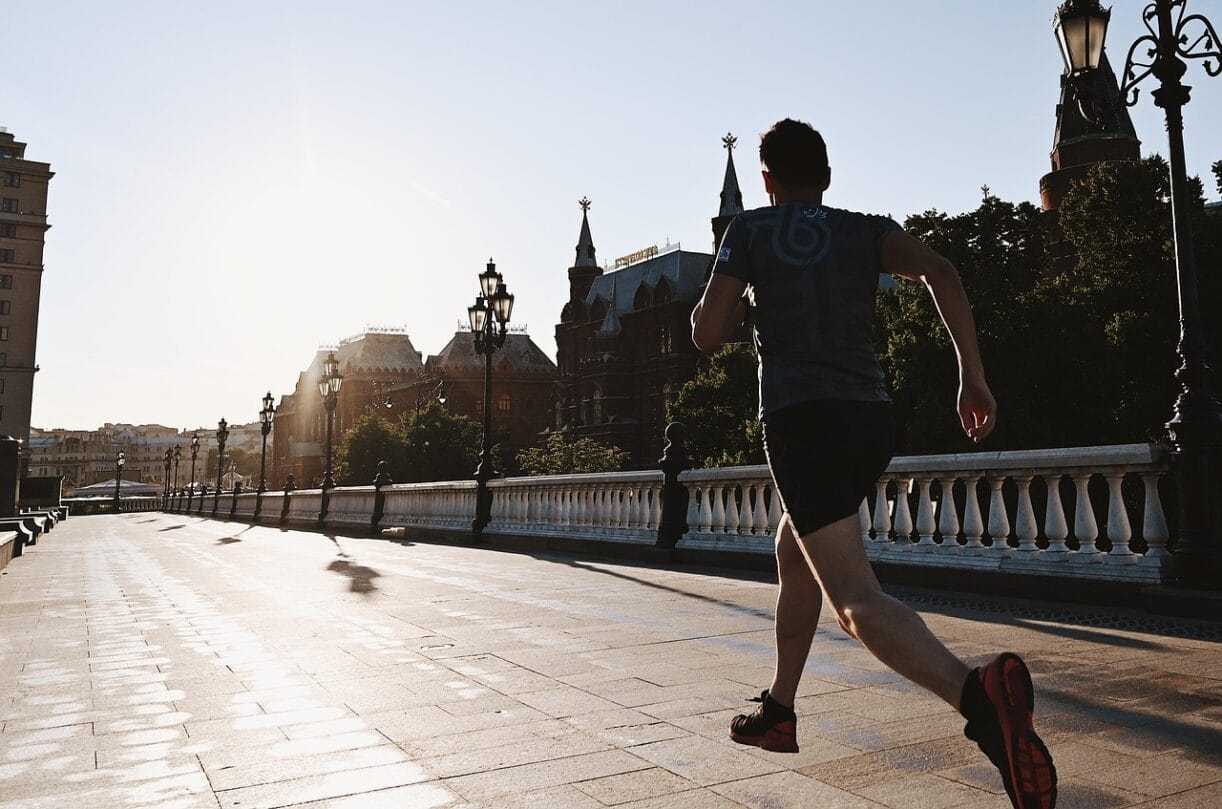
Run and gun video means shooting fast, often alone, with no time to set up elaborate gear. You need a lens that works quickly, stays sharp in changing light, and doesn’t get in your way. Picking the wrong lens slows you down and costs you shots.
This guide breaks down the best lenses for run and gun video, what to look for, and which ones hold up in real-world use.
What Is Run and Gun Video?
Run and gun is a style of shooting where you move fast and adapt constantly. Think documentary filmmaking, news coverage, event video, street work, or solo travel content. You are often the only person on set. There is no lighting crew. No second assistant camera. Just you, your camera, and whatever lens is on it.
In that situation, a lens needs to do several things well:
Autofocus fast and accurately
Handle shifting light without constant manual adjustments
Stay small and light enough to move with
Give you a useful focal range without swapping glass constantly
A slow, manual-only lens that shines in a controlled studio might be your worst option on a fast-paced shoot.
Key Features to Look for in a Run and Gun Lens
Before getting into specific recommendations, here is what actually matters when you are shooting fast.
Autofocus Speed and Reliability
This is the most important factor. If your lens can not keep up with moving subjects, your footage is unusable. Look for lenses with fast linear motors or ultrasonic drive systems. Eye-tracking and subject detection only work as well as the lens allows.
Image Stabilization
Optical stabilization matters a lot when you are hand-holding. A good OIS system can buy you several stops of stability, which helps in lower light and when walking while shooting. Some cameras have in-body stabilization (IBIS) that works with the lens, and some do not. Know your camera before deciding how much you need lens-based IS.
Aperture
A fast aperture — f/1.8 to f/2.8 — helps in low light. But wide apertures also mean a thinner depth of field, which makes autofocus more critical. For run and gun, f/2.8 is often the sweet spot. It gives you light-gathering ability without making focus razor-thin.
Focal Length
No single focal length covers everything. But if you have to pick one, something in the 24–35mm range on full frame covers a lot of situations. On a crop sensor camera, the equivalent is around 16–24mm. Zoom lenses in the 16–55mm or 24–70mm range let you cover more ground without swapping glass mid-shoot.
Size and Weight
A heavy lens strains your arm during long days. It also makes your rig look more intimidating to people around you — which matters if you are shooting candid content in public spaces. Smaller is usually better for run and gun.
You will bump this lens into things. It will get rained on. It will get dropped eventually. Look for weather sealing and solid build. You do not need cinema lens durability, but you want something that will survive a working day.
Best Lenses for Run and Gun Video
Here are the top picks across different camera systems and budgets.
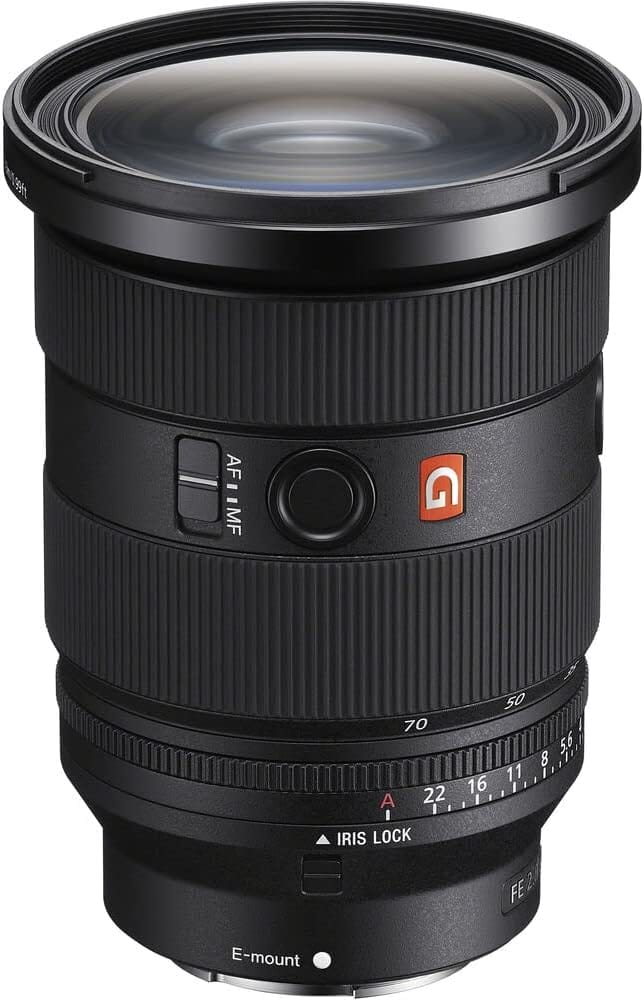
1. Sony 24-70mm f/2.8 GM II (Sony E-Mount)
This is one of the best zoom lenses available right now for video work. The second generation version is significantly lighter than the original, which was always the main complaint. At f/2.8 throughout the zoom range, it handles low light well. The autofocus is fast and smooth. Breathing control is good, which matters when you are pulling focus during recording.
The focal range covers wide environmental shots through a tighter portrait perspective. For solo shooters on Sony cameras, this is the workhorse option.
Downside: It is expensive. If budget is tight, the Sony 24-105mm f/4 G is a good alternative with more range, slightly smaller aperture, and lower price.
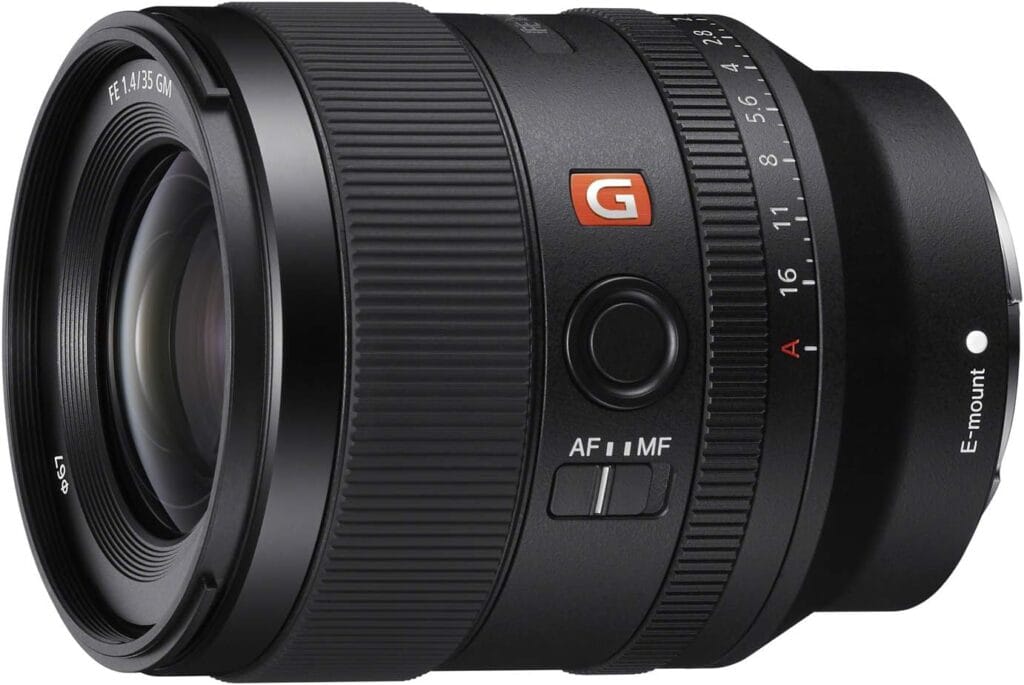
2. Sony 35mm f/1.4 GM (Sony E-Mount)
If you prefer a prime lens, the Sony 35mm f/1.4 GM is exceptional. The autofocus is fast enough for run and gun use. The image quality is very sharp even wide open. At f/1.4 you have real low light capability.
A 35mm focal length on full frame is close to natural human field of view, which makes it easy to compose quickly. You are not squinting into a tight telephoto or guessing how much the wide end is exaggerating your scene.
Downside: One focal length means more foot movement from you to reframe.
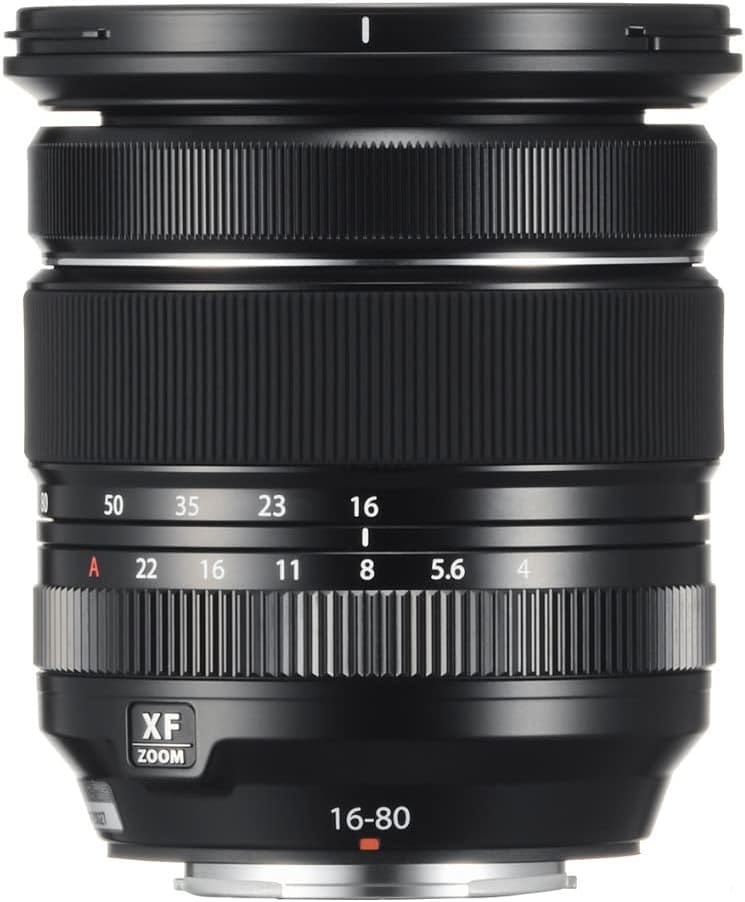
3. Fujifilm XF 16-80mm f/4 R OIS WR (Fujifilm X-Mount)
For Fujifilm shooters, this lens is almost ideal for run and gun. The optical stabilization is excellent — Fujifilm rates it at 6 stops when combined with IBIS. The zoom range is versatile. It is weather sealed. And it is compact enough to use all day without fatigue.
The f/4 aperture is not blazing fast, but with good OIS and modern Fujifilm sensors that handle high ISO well, it works in most real-world lighting.
Downside: Not ideal in very dark environments without additional light.
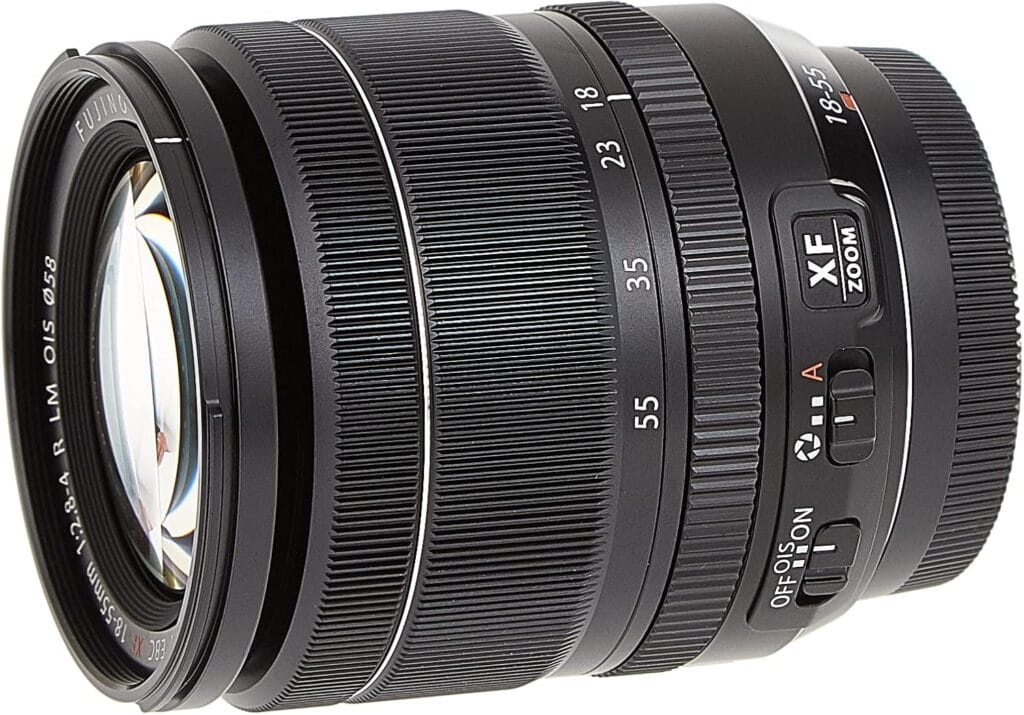
4. Fujifilm XF 18-55mm f/2.8-4 R LM OIS (Fujifilm X-Mount)
This is the kit zoom that actually performs well. It is lighter and cheaper than the 16-80mm, and the f/2.8 end at 18mm gives you a bit more speed in low light at wider angles. Autofocus is reliable for moving subjects.
For someone starting out with Fujifilm run and gun work, this lens often comes bundled with the camera body and covers most shooting situations competently.
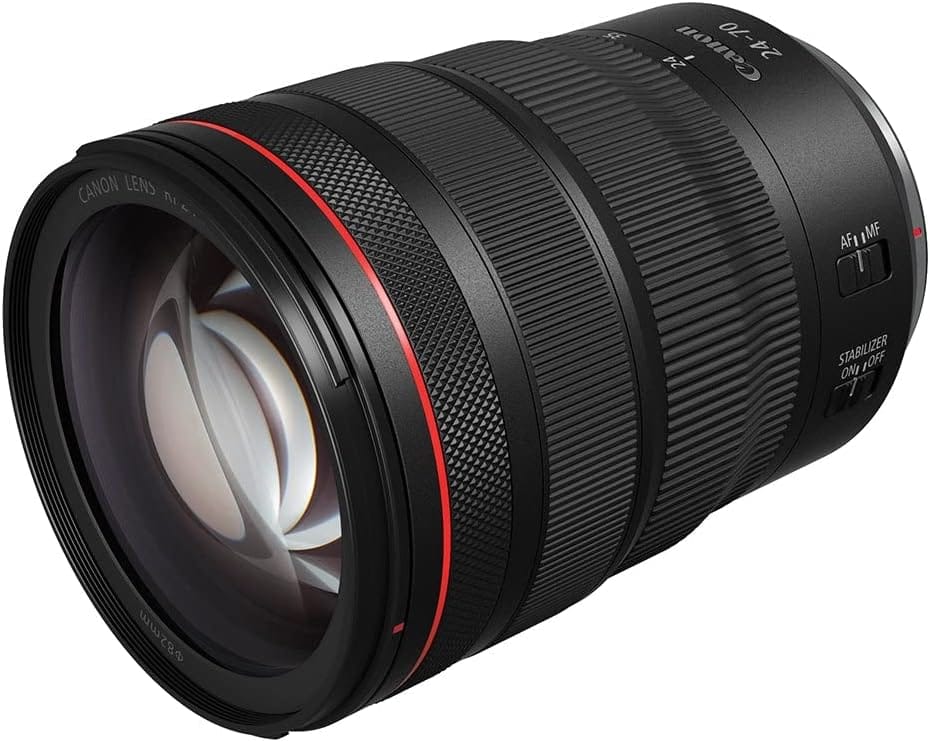
5. Canon RF 24-70mm f/2.8 L IS USM (Canon R-Mount)
Canon’s RF mount glass is among the best available right now. The 24-70mm f/2.8 L with built-in IS is a serious option for Canon R-system shooters doing run and gun work. The autofocus leverages Canon’s Dual Pixel CMOS AF, which is widely considered the most reliable subject-tracking system on the market.
If you shoot with a Canon R5, R6, or similar body, the combination of lens autofocus and body tracking is hard to beat for keeping subjects sharp while moving.
Downside: Heavy and expensive.
6. Canon RF 35mm f/1.8 Macro IS STM (Canon R-Mount)
A budget-friendly prime for Canon RF shooters. It is small, light, and has useful image stabilization built in. The STM motor is smooth and quiet, which helps when recording audio alongside video. At f/1.8 it handles lower light reasonably well.
This is not the sharpest or fastest lens in Canon’s lineup, but for the price and size, it earns its place on any run and gun rig.
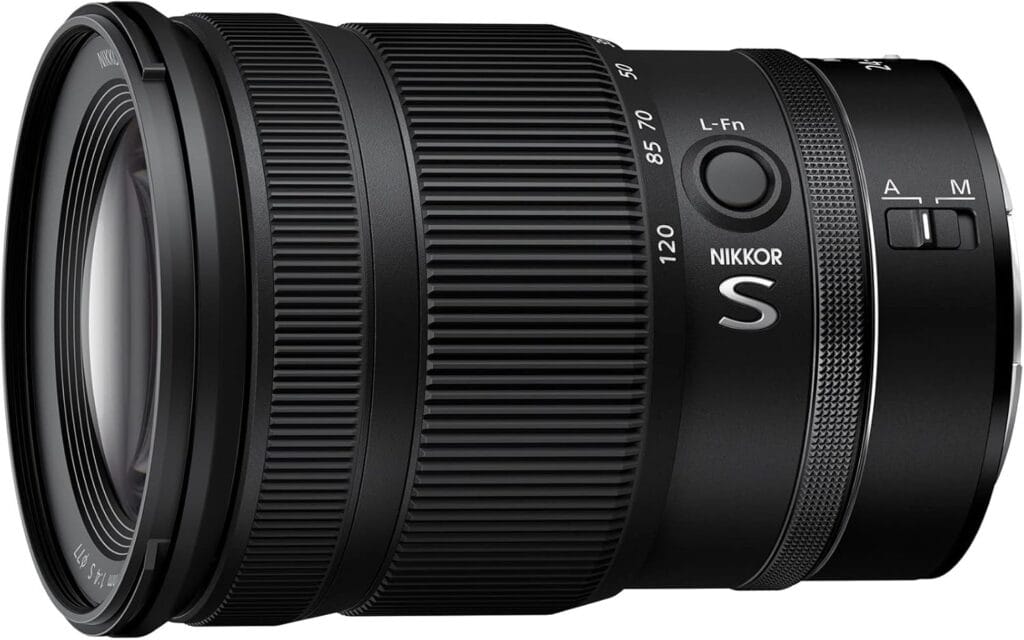
7. Nikon Z 24-120mm f/4 S (Nikon Z-Mount)
Nikon’s Z system has excellent lenses. The 24-120mm f/4 S gives you a massive focal range in one package. Going from a wide environmental shot to a compressed 120mm portrait without touching glass makes this genuinely useful for event and documentary work.
Autofocus on Nikon Z cameras is very capable, and this lens pairs well with it. The f/4 aperture is consistent across the zoom range, so you do not have to think about exposure shifts when zooming.
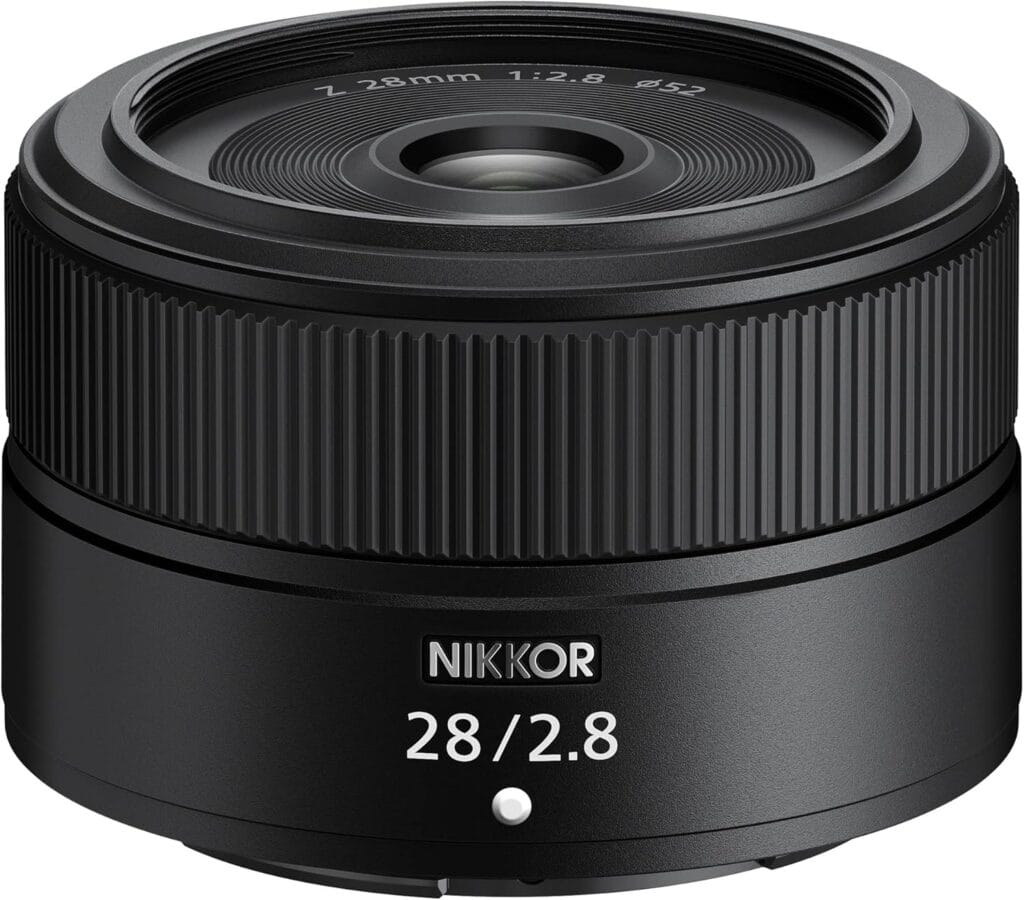
8. Nikon Z 28mm f/2.8 (Nikon Z-Mount)
If you want a compact, affordable prime for Nikon Z, this 28mm is a smart option. Small enough to carry all day, wide enough to capture environment and context, and fast enough to perform well in decent light. It is not the most exciting lens spec-wise, but it does not slow you down.
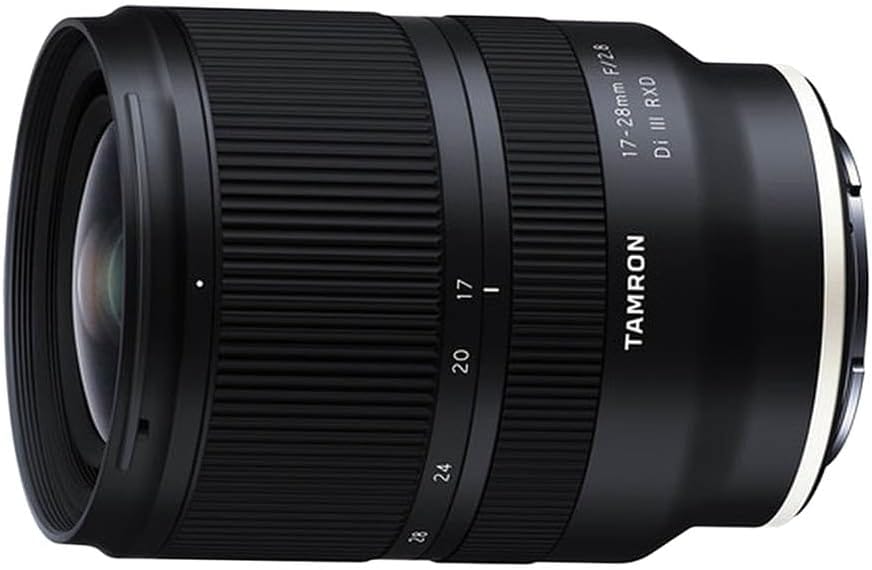
9. Tamron 17-28mm f/2.8 Di III RXD (Sony E-Mount)
Third-party lenses have gotten very good. Tamron’s 17-28mm f/2.8 is a great example. It is lighter and cheaper than Sony’s native options, autofocus is fast, and optically it performs well for video. The wide end gives you a lot of environmental context, which is useful for documentary and travel work.
Pair this with a 28-75mm Tamron and you have two fast zooms covering a huge range for less than the price of one Sony GM lens.
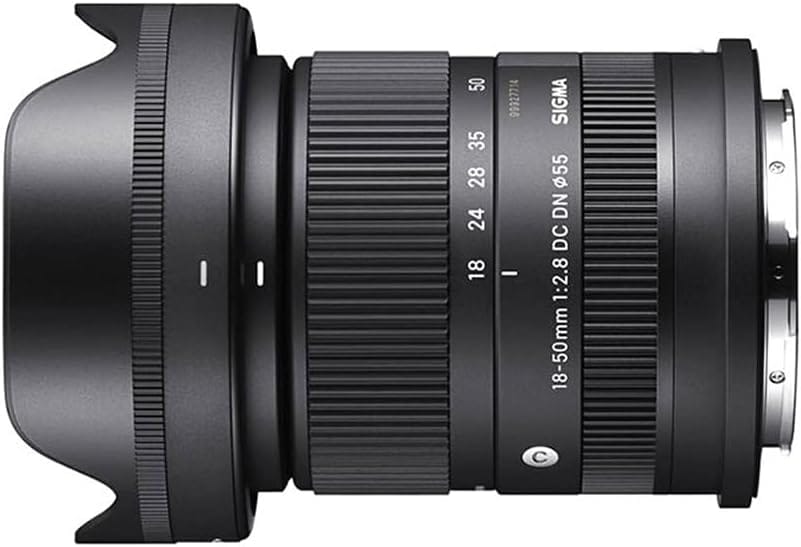
10. Sigma 18-50mm f/2.8 DC DN (Multiple Mounts)
For APS-C cameras — including Fujifilm, Sony, Canon, and Nikon crop sensor bodies — this Sigma is one of the best value lenses available. f/2.8 throughout the range. Compact. Optically very good. And much cheaper than comparable native options.
Run and gun on a crop sensor body with this lens is a genuinely strong combination. The 18-50mm range on APS-C translates to roughly 27-75mm full frame equivalent, which covers most situations well.
Prime vs. Zoom for Run and Gun
This comes up constantly. Here is the honest answer: zoom lenses are almost always better for run and gun work.
A zoom gives you flexibility without interrupting your shooting. Changing a prime while action is happening means you miss shots. On a run and gun shoot, the lens you have on is the only lens that matters.
That said, primes have real advantages. They are usually lighter, sharper, and faster (wider aperture). If you know your shooting environment well — like you always shoot the same type of event in a specific venue — a prime at the right focal length can serve you well.
But if you do not know exactly what you will face, a zoom is the safer choice.
Wide Angle vs. Standard vs. Telephoto
Wide Angle (16–35mm)
Wide angles are great for pulling in environment and context. They have inherently deeper depth of field, which makes autofocus more forgiving. In tight spaces, they are often the only option. The downside is they exaggerate perspective and can distort faces at close distances.
Standard (35–50mm)
The most versatile range. Looks natural to the human eye. Works for interviews, walking footage, wide context, and tighter subject shots. If you had to pick one range for run and gun, this is it.
Telephoto (70–200mm)
Useful for events and situations where you cannot get physically close to your subject. Compresses perspective in a pleasing way for people-focused footage. The downside for run and gun is that telephoto lenses magnify camera shake, and autofocus needs to be fast and confident to track moving subjects at distance.
Some videographers use old manual lenses adapted to modern cameras. You can get sharp images and a specific look. But for run and gun, manual lenses slow you down significantly. You are pulling focus by hand while also moving, watching your subject, managing exposure, and trying to compose your shot.
Manual lenses work on tripods, on a crew-based set, or when you have a dedicated focus puller. For solo fast-paced shooting, they introduce more risk than reward.
Budget Considerations
Not everyone can spend $2,000 on lenses. Here is a rough breakdown by budget.
Under $500: Sigma 18-50mm f/2.8 DC DN, Canon RF 35mm f/1.8 STM, Fujifilm XF 18-55mm f/2.8-4, Nikon Z 28mm f/2.8. Good options exist in this range, especially on crop sensor systems.
$500–$1,000: Tamron 17-28mm f/2.8, Tamron 28-75mm f/2.8, Fujifilm XF 16-80mm f/4. This is where value per dollar is often strongest. Third-party options cover a lot of ground.
$1,000–$2,000: Sony 24-105mm f/4 G, Canon RF 24-70mm f/4 L, Nikon Z 24-120mm f/4. You are getting native manufacturer glass with full autofocus integration and solid build quality.
$2,000+: Sony 24-70mm f/2.8 GM II, Canon RF 24-70mm f/2.8 L, Sony 35mm f/1.4 GM. Top-tier options where you are paying for maximum optical performance and autofocus speed.
Stabilization: OIS vs. IBIS
Many modern cameras have in-body image stabilization. When your lens also has optical stabilization, they can work together for even better results — Sony calls this Active SteadyShot, Fujifilm calls it IBIS+OIS, and so on.
If your camera does not have IBIS — like many Fujifilm bodies older than the X-T4, or certain Sony bodies — a lens with strong OIS matters more. If your camera has excellent IBIS, you can get away with a lens that lacks OIS.
Check your specific camera body’s stabilization before deciding how much you need from the lens.
Recommended Setups by Camera System
Sony Full Frame (A7 series, FX3, FX30): Sony 24-70mm f/2.8 GM II as a primary. Tamron 17-28mm f/2.8 as a wider backup. Or go prime with the Sony 35mm f/1.4 GM if you know your focal length.
Fujifilm APS-C (X-T, X-S, X-H series): Fujifilm XF 16-80mm f/4 for a solid all-rounder. Sigma 18-50mm f/2.8 if budget is a concern.
Canon R Full Frame (R5, R6, R8): Canon RF 24-70mm f/2.8 L for top-end work. Canon RF 24-105mm f/4 L for a lighter option with more range.
Nikon Z Full Frame (Z6, Z7, Z8): Nikon Z 24-120mm f/4 S for versatility. Nikon Z 35mm f/1.8 S for prime work.
Final Thoughts
The best lens for run and gun video is the one that keeps up with you. Fast autofocus, useful focal range, manageable size, and good optical quality matter most. Brand loyalty matters less than picking the right tool for how you actually work.
Start with a versatile zoom in the 24–70mm or equivalent range. Add a faster prime later if you need low light capability. And prioritize autofocus performance above almost everything else — sharp footage you missed getting is worth nothing.
Pick something that works, go shoot, and adjust based on what you actually run into.
George Margas is the founder and lead content creator at 335mm.com. With over a decade of experience in photography and a keen interest in optical technology, George combines technical expertise with practical insights to help photographers make informed decisions about their gear. As the owner of gemweb media agency, he brings a unique perspective on digital content creation and the evolving landscape of visual media. When not writing about lenses or testing the latest camera equipment, George can be found exploring new photography techniques and sharing his knowledge through workshops and online tutorials.
We use cookies to personalise content and ads, to provide social media features and to analyse our traffic. We also share information about your use of our site with our social media, advertising and analytics partners. View more
Suggested text: When visitors leave comments on the site we collect the data shown in the comments form, and also the visitor’s IP address and browser user agent string to help spam detection.An anonymized string created from your email address (also called a hash) may be provided to the Gravatar service to see if you are using it. The Gravatar service privacy policy is available here: https://automattic.com/privacy/. After approval of your comment, your profile picture is visible to the public in the context of your comment.
Media
Suggested text: If you upload images to the website, you should avoid uploading images with embedded location data (EXIF GPS) included. Visitors to the website can download and extract any location data from images on the website.
Cookies
Suggested text: If you leave a comment on our site you may opt-in to saving your name, email address and website in cookies. These are for your convenience so that you do not have to fill in your details again when you leave another comment. These cookies will last for one year.If you visit our login page, we will set a temporary cookie to determine if your browser accepts cookies. This cookie contains no personal data and is discarded when you close your browser.When you log in, we will also set up several cookies to save your login information and your screen display choices. Login cookies last for two days, and screen options cookies last for a year. If you select "Remember Me", your login will persist for two weeks. If you log out of your account, the login cookies will be removed.If you edit or publish an article, an additional cookie will be saved in your browser. This cookie includes no personal data and simply indicates the post ID of the article you just edited. It expires after 1 day.
Embedded content from other websites
Suggested text: Articles on this site may include embedded content (e.g. videos, images, articles, etc.). Embedded content from other websites behaves in the exact same way as if the visitor has visited the other website.These websites may collect data about you, use cookies, embed additional third-party tracking, and monitor your interaction with that embedded content, including tracking your interaction with the embedded content if you have an account and are logged in to that website.
Who we share your data with
Suggested text: If you request a password reset, your IP address will be included in the reset email.
How long we retain your data
Suggested text: If you leave a comment, the comment and its metadata are retained indefinitely. This is so we can recognize and approve any follow-up comments automatically instead of holding them in a moderation queue.For users that register on our website (if any), we also store the personal information they provide in their user profile. All users can see, edit, or delete their personal information at any time (except they cannot change their username). Website administrators can also see and edit that information.
What rights you have over your data
Suggested text: If you have an account on this site, or have left comments, you can request to receive an exported file of the personal data we hold about you, including any data you have provided to us. You can also request that we erase any personal data we hold about you. This does not include any data we are obliged to keep for administrative, legal, or security purposes.
Where your data is sent
Suggested text: Visitor comments may be checked through an automated spam detection service.