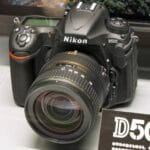
Unleash Your Inner David Attenborough: The Best Nikon Lenses for Wildlife Photography
Did you know that the average cost of a professional wildlife photography lens can range from $1,000 to over $10,000? [Source needed] For many, this is a significant investment, but the right glass can transform your ability to capture fleeting moments in nature. If you’re a Nikon shooter eager to bring distant subjects closer or freeze fast action, choosing the best lens for wildlife photography Nikon offers is paramount. This guide will navigate you through the essential features and recommend top contenders to elevate your craft.
Why the Right Lens Matters for Wildlife Photography
The pursuit of wildlife photography is a dance with patience and precision. You’re often working with subjects that are skittish, fast-moving, and unpredictable. The lens you choose directly impacts your success. A telephoto lens, for instance, allows you to fill the frame with your subject without disturbing it. Fast autofocus is critical for sharp images of birds in flight or a predator mid-pounce. Excellent image stabilization combats the inevitable camera shake that comes with hand-holding long lenses. Ultimately, the right lens is your window to capturing the raw beauty and drama of the natural world.
Key Lens Characteristics for Wildlife Shooters
When evaluating the best lens for wildlife photography Nikon users can acquire, several technical aspects stand out. These aren’t just fancy terms; they directly translate to better photos in challenging environments.
Focal Length: This determines how ‘zoomed in’ your image appears. For wildlife, longer focal lengths (300mm and above) are generally preferred to maintain a safe distance from wary animals. A versatile zoom lens offers flexibility.
Aperture: A wider maximum aperture (lower f-number, like f/2.8 or f/4) lets in more light, crucial for low-light conditions and achieving a pleasingly blurred background (bokeh) that isolates your subject. However, wider apertures often come with a higher price tag and heavier lenses.
Autofocus Speed and Accuracy: Wildlife rarely stays still. A lens with a fast, reliable autofocus system, especially one that can track moving subjects, is indispensable. Look for technologies like Nikon’s Silent Wave Motor (SWM).
Image Stabilization (VR): Vibration Reduction (VR) in Nikon lenses helps counteract camera shake, allowing you to shoot sharper images at slower shutter speeds or with longer focal lengths handheld. This is a game-changer for many wildlife photographers.
Build Quality and Weather Sealing: Animals don’t care about the weather. Lenses designed for outdoor use often feature robust construction and seals to protect against dust and moisture.
Who This Guide Is For
This guide is for Nikon DSLR and mirrorless camera owners who are passionate about capturing images of animals in their natural habitats. Whether you’re a beginner looking for your first dedicated wildlife lens, an enthusiast upgrading your kit, or a seasoned pro seeking specific recommendations for your Nikon system, you’ll find valuable insights here. It’s for those who understand that investing in quality optics is a significant step towards achieving their photographic goals. If you’re tired of blurry shots of distant creatures and crave the detail and impact of professional wildlife imagery, this is your roadmap.
Who This Guide Is NOT For
This article isn’t for smartphone photographers or those exclusively interested in studio portraiture or landscape photography. If you’re a Canon, Sony, or Fujifilm shooter, you’ll need to look elsewhere for lens recommendations specific to those camera systems. Furthermore, if budget is absolutely no concern and you’re only interested in the most exotic, top-tier, and astronomically expensive professional lenses, this guide aims for a balance of performance and accessibility across various price points.
Top Nikon Lenses for Wildlife Photography: Our Picks
Navigating the vast Nikon lens catalog can feel like trying to spot a snow leopard in a blizzard. We’ve narrowed down the field to some of the most highly regarded lenses that consistently deliver for wildlife photographers.
1. Nikon AF-S NIKKOR 200-500mm f/5.6E ED VR
This lens is often hailed as a ‘sweet spot’ for many Nikon wildlife shooters, offering incredible reach at a relatively accessible price point. It’s a workhorse that balances performance with value.
Reach: The 200-500mm range is fantastic for birds, mammals, and other subjects that require significant magnification. You can capture intimate details without getting too close.
Image Stabilization: Nikon’s excellent VR system is a lifesaver, allowing for sharper shots even when hand-holding this substantial lens.
Autofocus: While not the absolute fastest on the market, the AF performance is generally very good for most wildlife scenarios.
Value: Compared to many other telephoto zooms with similar reach, this lens offers exceptional value for money.
Pros:
Superb reach for the price.
Effective VR system.
Good image quality throughout the zoom range.
Cons:
Maximum aperture of f/5.6 can be limiting in very low light.
Can be a bit heavy for extended handheld shooting.
2. Nikon NIKKOR Z 100-400mm f/4.5-5.6 VR S
For those who have transitioned to Nikon’s mirrorless Z system, this lens is a phenomenal choice. It offers versatility and excellent optical quality in a more compact package than its DSLR predecessor.
Versatility: The 100-400mm range is incredibly flexible, covering medium to long-range subjects effectively. It’s a true ‘do-it-all’ zoom for many wildlife situations.
Optical Quality: Being an ‘S-Line’ lens, it boasts exceptional sharpness, contrast, and color rendition.
Autofocus: Nikon’s mirrorless AF systems are among the best, and this lens takes full advantage, offering rapid and precise focusing.
Size & Weight: It’s relatively compact and lighter than many comparable DSLR lenses, making it more manageable.
Pros:
Outstanding image quality.
Fast and accurate autofocus.
Excellent zoom range for various wildlife.
Weather-sealed construction.
Cons:
Variable aperture can be a drawback in low light.
Higher price point than the 200-500mm.
3. Nikon AF-S NIKKOR 80-400mm f/4.5-5.6G ED VR
This is another stalwart for Nikon DSLR users, offering a broad telephoto zoom range with good performance. It’s a reliable option that has served many photographers well.
Range: The 80-400mm range is very useful, providing flexibility from medium telephoto to significant reach.
Image Quality: Delivers sharp images with good color. It performs best when stopped down slightly from its maximum aperture.
VR: Effective vibration reduction aids handheld shooting.
Pros:
Broad focal length range.
Good image quality.
Robust build.
Cons:
Autofocus can be slower than newer lenses.
Variable aperture limits low-light performance.
4. Nikon NIKKOR Z 400mm f/4.5 VR S
If you’re looking for a prime lens with exceptional sharpness and a manageable size for mirrorless, this 400mm f/4.5 prime is a stunner. Prime lenses often offer superior image quality and faster apertures than zooms.
Sharpness: As an S-Line prime, its optical performance is top-notch, delivering incredible detail.
Aperture: f/4.5 is a respectable aperture for wildlife, allowing for decent low-light capability and subject isolation.
Size & Weight: Remarkably light and compact for a 400mm lens, making it far more portable than many alternatives.
Autofocus: Blazing fast and accurate, as expected from a modern Z-mount lens.
Pros:
Exceptional sharpness and image quality.
Relatively lightweight and portable for its focal length.
Fast and reliable autofocus.
Excellent VR.
Cons:
Fixed focal length requires ‘zooming with your feet.’
More expensive than the 200-500mm zoom.
5. Nikon AF-S NIKKOR 500mm f/5.6E PF ED VR
This lens is a marvel of optical engineering, offering a 500mm focal length in a surprisingly compact and lightweight package thanks to Phase Fresnel (PF) technology. It’s a fantastic option for those prioritizing portability without sacrificing reach.
Portability: This is its standout feature. It’s significantly smaller and lighter than traditional 500mm lenses, making it much easier to carry and hand-hold.
Image Quality: Delivers excellent sharpness and detail, rivaling much larger lenses.
Incredibly compact and lightweight for a 500mm lens.
Superb image quality.
Great for travel and extended carrying.
Cons:
f/5.6 aperture can be limiting in very dim conditions.
Autofocus is good, but not as lightning-fast as some top-tier primes.
6. Nikon NIKKOR Z 800mm f/6.3 VR S
For ultimate reach on the Z system, this 800mm prime is a game-changer. It brings distant subjects incredibly close with breathtaking detail and is surprisingly manageable for its immense focal length.
Reach: 800mm is serious telephoto territory, perfect for shy wildlife or distant birds.
Optical Performance: As an S-Line lens, it offers outstanding sharpness, clarity, and color reproduction.
PF Element: Utilizes Phase Fresnel technology to reduce size and weight compared to conventional designs.
AF & VR: Features Nikon’s latest autofocus and VR technology for excellent performance.
Pros:
Unmatched reach in a relatively portable package.
Stunning image quality.
Advanced AF and VR systems.
Cons:
Very expensive.
f/6.3 aperture requires good light or higher ISO.
Budget-Friendly Options and Considerations
Not everyone can afford a top-tier professional lens. Thankfully, there are ways to get into wildlife photography without breaking the bank.
Used Market: Look for older but still capable lenses like the Nikon AF-S NIKKOR 80-400mm f/4.5-5.6G ED VR or even older 300mm primes. Reputable used gear dealers can be a goldmine.
Third-Party Lenses: Brands like Sigma and Tamron offer excellent telephoto lenses for Nikon F-mount (with adapters for Z-mount). The Sigma 150-600mm f/5-6.3 DG OS HSM Contemporary is a popular choice for its reach and affordability.
Crop Factor: Remember that Nikon’s DX (APS-C) format cameras have a crop factor. A 300mm lens on a DX camera effectively provides the field of view of a 450mm lens on a full-frame camera, offering more ‘reach’ with smaller lenses. This can be a significant advantage for budget-conscious wildlife photographers using DX bodies.
Comparison Table: Key Wildlife Lenses for Nikon
| Lens Name | Mount | Type | Max Aperture | Min Focus Dist. (m) | Weight (g) | Approx. Price ($USD) [Source needed] | Key Feature | | :——————————————- | :——— | :—– | :———– | :—————— | :——— | :———————————– | :————————————————- | | Nikon AF-S 200-500mm f/5.6E ED VR | F (DSLR) | Zoom | f/5.6 | 2.2 | 2330 | 1,400 | Excellent reach-to-price ratio | | Nikon NIKKOR Z 100-400mm f/4.5-5.6 VR S | Z (Mirrorless)| Zoom | f/4.5-5.6 | 0.75 | 1355 | 2,600 | Versatile, sharp S-Line quality | | Nikon AF-S 80-400mm f/4.5-5.6G ED VR | F (DSLR) | Zoom | f/4.5-5.6 | 1.75 | 1570 | 2,300 | Broad range, reliable performer | | Nikon NIKKOR Z 400mm f/4.5 VR S | Z (Mirrorless)| Prime | f/4.5 | 2.5 | 1185 | 1,100 | Lightweight, sharp S-Line prime | | Nikon AF-S 500mm f/5.6E PF ED VR | F (DSLR) | Prime | f/5.6 | 3.0 | 1460 | 3,100 | Compact and light 500mm prime | | Nikon NIKKOR Z 800mm f/6.3 VR S | Z (Mirrorless)| Prime | f/6.3 | 2.3 | 2390 | 6,300 | Ultimate reach for Z system, PF element | | Sigma 150-600mm f/5-6.3 DG OS HSM C (Nikon F) | F (DSLR) | Zoom | f/5-6.3 | 2.6 | 1080 | 1,000 | Affordable super-telephoto zoom (needs adapter for Z) |
Note: Prices are approximate and subject to change. Weight can vary slightly with accessories.
Mistakes to Avoid When Buying Your Next Wildlife Lens
Buying a lens is an exciting prospect, but pitfalls exist. Steer clear of these common blunders to ensure you make a wise investment.
Ignoring Your Camera System: Buying a fantastic F-mount lens for your new Z-series camera without considering the FTZ adapter (and its potential autofocus limitations with older lenses) can lead to disappointment. Conversely, buying a Z-mount lens for an older DSLR is impossible. Ensure compatibility!
Getting Fixated on a Single Spec: Don’t only look at focal length. A lens with less reach but faster autofocus and a wider aperture might outperform a longer lens with sluggish AF in low light. Consider the entire* package.
Underestimating Weight and Size: A 600mm f/4 lens might be optically superb, but if you can’t comfortably carry it for hours or hand-hold it for shots, its practical utility plummets. Read reviews and, if possible, try holding the lens before buying.
Forgetting About Teleconverters: While teleconverters (like Nikon’s TC-14E or TC-20E) can extend your reach (e.g., adding 1.4x or 2x magnification), they come with trade-offs. They reduce the maximum aperture, slow down autofocus, and can slightly degrade image quality. Factor these compromises into your decision.
Buying Without a Plan: Are you primarily shooting small birds in flight, or larger mammals from a distance? Your target subjects will heavily influence the ideal focal length and aperture you need. Define your needs before you shop.
Actionable Checklist for Choosing Your Nikon Wildlife Lens
Use this checklist to systematically evaluate your options and make an informed decision:
[ ] Define Your Primary Subjects: What kind of wildlife will you photograph most often (birds, mammals, insects)?
[ ] Assess Your Shooting Environment: Will you be shooting in bright daylight, dawn/dusk, or challenging weather?
[ ] Consider Your Camera Body: Are you using a DSLR (F-mount) or a mirrorless Z-series camera? Full-frame or APS-C (DX)?
[ ] Set Your Budget: Determine a realistic price range, including potential adapters or accessories.
[ ] Prioritize Key Features: Rank the importance of focal length, aperture, autofocus speed, image stabilization, and size/weight.
[ ] Research Specific Lenses: Read reviews, watch video comparisons, and look at sample images from the lenses on your shortlist.
[ ] Check Compatibility: Verify that the lens mount is correct for your camera or if an adapter is needed and suitable.
[ ] Evaluate Used Options: Explore reputable sources for pre-owned lenses if budget is a concern.
[ ] Try Before You Buy (If Possible): Renting or handling a lens in a store can reveal crucial ergonomic and performance aspects.
Conclusion: Finding Your Perfect Nikon Wildlife Lens
Selecting the best lens for wildlife photography Nikon offers is a journey, not a destination. It requires understanding your needs, your camera, and the capabilities of modern optics. Whether you opt for the incredible reach of the 200-500mm, the sophisticated quality of a Z-series S-Line lens, or a more budget-conscious third-party option, the goal remains the same: to capture the wild world with stunning clarity and impact. Remember that practice, patience, and understanding animal behavior are just as crucial as the gear you carry. Happy shooting!
Frequently Asked Questions (FAQs)
What is the most important feature in a wildlife photography lens?
While focal length is crucial for getting close to distant subjects, autofocus speed and accuracy are arguably the most critical features for wildlife photography. Capturing a sharp image of a fast-moving bird or animal often depends entirely on how quickly and reliably your lens can lock focus.
Can I use older Nikon F-mount lenses on my new Nikon Z mirrorless camera?
Yes, you can! With the Nikon FTZ or FTZ II adapter, you can mount most F-mount DSLR lenses onto a Z-series mirrorless camera. Autofocus and VR performance are generally excellent, though some older or slower lenses might not perform as optimally as native Z-mount glass. It’s a great way to utilize existing investments.
Should I prioritize zoom or prime lenses for wildlife photography?
Both have their advantages. Zoom lenses (like the 200-500mm or 100-400mm) offer incredible versatility, allowing you to quickly reframe shots without moving. Prime lenses (like a 400mm or 500mm) often provide superior sharpness, better low-light performance (wider apertures), and can encourage more thoughtful composition. For beginners, a versatile zoom is often recommended, while experienced photographers might appreciate the specific benefits of primes.
How much should I expect to spend on a good wildlife lens?
A truly good wildlife lens for Nikon can range significantly. Entry-level options might start around $500-$1000 (often third-party zooms or older used lenses). Mid-range lenses, offering a better balance of performance and features, typically fall between $1,000 and $2,500. Professional-grade lenses with exceptional reach, speed, and build quality can easily cost $3,000 to $7,000 or much more.
Is a 300mm lens enough for wildlife photography?
A 300mm lens can be a good starting point, especially on Nikon’s DX (APS-C) format cameras where the effective focal length becomes around 450mm due to the crop factor. However, for smaller birds or shy mammals that require significant distance, a 300mm might feel limiting. Many wildlife photographers find lenses in the 400mm to 600mm range (or even longer) more suitable for a wider variety of subjects and situations.
What is the benefit of a lens with a Phase Fresnel (PF) element?
Lenses with Phase Fresnel (PF) elements, like Nikon’s 500mm f/5.6E PF ED VR and 800mm f/6.3 VR S, use a special type of lens element that refracts light differently than traditional glass. This allows Nikon to create significantly smaller, lighter, and more compact telephoto lenses compared to conventional designs offering the same focal length and aperture. This makes them much more portable and easier to hand-hold.
George Margas is the founder and lead content creator at 335mm.com. With over a decade of experience in photography and a keen interest in optical technology, George combines technical expertise with practical insights to help photographers make informed decisions about their gear. As the owner of gemweb media agency, he brings a unique perspective on digital content creation and the evolving landscape of visual media. When not writing about lenses or testing the latest camera equipment, George can be found exploring new photography techniques and sharing his knowledge through workshops and online tutorials.
We use cookies to personalise content and ads, to provide social media features and to analyse our traffic. We also share information about your use of our site with our social media, advertising and analytics partners. View more
Suggested text: When visitors leave comments on the site we collect the data shown in the comments form, and also the visitor’s IP address and browser user agent string to help spam detection.An anonymized string created from your email address (also called a hash) may be provided to the Gravatar service to see if you are using it. The Gravatar service privacy policy is available here: https://automattic.com/privacy/. After approval of your comment, your profile picture is visible to the public in the context of your comment.
Media
Suggested text: If you upload images to the website, you should avoid uploading images with embedded location data (EXIF GPS) included. Visitors to the website can download and extract any location data from images on the website.
Cookies
Suggested text: If you leave a comment on our site you may opt-in to saving your name, email address and website in cookies. These are for your convenience so that you do not have to fill in your details again when you leave another comment. These cookies will last for one year.If you visit our login page, we will set a temporary cookie to determine if your browser accepts cookies. This cookie contains no personal data and is discarded when you close your browser.When you log in, we will also set up several cookies to save your login information and your screen display choices. Login cookies last for two days, and screen options cookies last for a year. If you select "Remember Me", your login will persist for two weeks. If you log out of your account, the login cookies will be removed.If you edit or publish an article, an additional cookie will be saved in your browser. This cookie includes no personal data and simply indicates the post ID of the article you just edited. It expires after 1 day.
Embedded content from other websites
Suggested text: Articles on this site may include embedded content (e.g. videos, images, articles, etc.). Embedded content from other websites behaves in the exact same way as if the visitor has visited the other website.These websites may collect data about you, use cookies, embed additional third-party tracking, and monitor your interaction with that embedded content, including tracking your interaction with the embedded content if you have an account and are logged in to that website.
Who we share your data with
Suggested text: If you request a password reset, your IP address will be included in the reset email.
How long we retain your data
Suggested text: If you leave a comment, the comment and its metadata are retained indefinitely. This is so we can recognize and approve any follow-up comments automatically instead of holding them in a moderation queue.For users that register on our website (if any), we also store the personal information they provide in their user profile. All users can see, edit, or delete their personal information at any time (except they cannot change their username). Website administrators can also see and edit that information.
What rights you have over your data
Suggested text: If you have an account on this site, or have left comments, you can request to receive an exported file of the personal data we hold about you, including any data you have provided to us. You can also request that we erase any personal data we hold about you. This does not include any data we are obliged to keep for administrative, legal, or security purposes.
Where your data is sent
Suggested text: Visitor comments may be checked through an automated spam detection service.