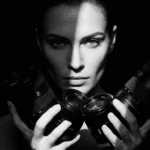
The Best Lenses for Business Portraits: Crafting Professional Images
Did you know that a staggering 93% of communication is non-verbal? [Source needed] In the business world, your portrait is often the first non-verbal cue someone receives. The right lens doesn’t just capture an image; it shapes perception, conveying professionalism, approachability, and expertise. Choosing the best lens for business portraits is paramount for making that crucial first impression count. It’s about more than just a sharp picture; it’s about telling a story with light and focus.
Who This Is For
This guide is meticulously crafted for photographers, both amateur and seasoned, who are looking to elevate their business portraiture. If you’re a corporate photographer, a freelancer specializing in professional headshots, or even a small business owner wanting to capture your team’s best side, this information is for you. It’s for anyone who understands that a compelling visual presence is a cornerstone of professional success. We’ll delve into the technicalities without overwhelming you, focusing on practical applications that yield tangible results. Aspiring portraitists eager to hone their craft will find a wealth of actionable advice.
Who This Is NOT For
This article isn’t intended for those solely interested in landscape photography, wildlife, or fast-paced sports action. While some principles might overlap, the specific needs of business portraiture – clarity, flattering perspectives, and a polished aesthetic – are our primary focus. If your goal is to capture sweeping vistas or the thrill of a race, other lens types will better suit your needs. Likewise, if you’re looking for a quick fix without understanding the underlying principles of light, composition, and lens characteristics, this might not be the shortcut you’re seeking. We’re building a foundation here, not just offering a superficial glance.
Understanding the Core Concepts: Focal Length and Aperture
Before we dive into specific lens recommendations, let’s demystify two critical elements that dictate a lens’s performance: focal length and aperture. These aren’t just technical jargon; they are the painter’s brushstrokes in your photographic canvas.
Focal Length: The Perspective Shaper
Focal length, measured in millimeters (mm), determines the angle of view and the magnification of your lens. A shorter focal length (wide-angle) captures a broader scene, often distorting perspectives, especially at the edges. A longer focal length (telephoto) narrows the view, compressing the subject and making distant objects appear closer. For business portraits, we want a focal length that renders the human face naturally, avoiding unflattering distortion. Think of it as choosing the right mirror: a wide, funhouse mirror distorts; a true mirror reflects accurately.
- Wide-Angle Lenses (e.g., 24mm, 35mm): Can be useful for environmental portraits where the subject’s surroundings are important. However, they can distort facial features if the subject is too close, making noses appear larger and faces wider. They require careful positioning.
- Standard Lenses (e.g., 50mm): Often considered the “nifty fifty,” these offer a perspective very close to human vision. They provide a natural look with minimal distortion, making them a versatile choice for portraits. They excel in various lighting conditions.
- Telephoto Lenses (e.g., 85mm, 105mm, 135mm): These are the workhorses of portraiture. They offer a narrower field of view, allowing you to stand further back from your subject. This creates a pleasing compression of facial features, flattering the subject. They also excel at isolating the subject from the background, creating beautiful bokeh (background blur).
Aperture: The Light Controller and Depth of Field Master
Aperture refers to the opening within the lens that allows light to pass through to the sensor. It’s measured in f-stops (e.g., f/1.8, f/2.8, f/5.6). A wider aperture (smaller f-number) lets in more light and creates a shallower depth of field, meaning only a narrow plane is in sharp focus, with the background beautifully blurred. A narrower aperture (larger f-number) lets in less light and increases the depth of field, keeping more of the scene in focus.
- Wide Apertures (f/1.4, f/1.8, f/2.8): Ideal for low-light situations and for achieving that creamy, out-of-focus background (bokeh) that makes your subject pop. This is often a key characteristic for professional-looking portraits, drawing the viewer’s eye directly to the person.
- Moderate Apertures (f/4, f/5.6): Useful when you need more of the subject or their immediate surroundings in focus. This might be relevant for full-body shots or when incorporating specific background elements that are crucial to the narrative.
- Narrow Apertures (f/8, f/11): Generally too restrictive for typical headshots as they require more light and result in a deeper depth of field, which can make the background too distracting. However, they can be useful for group business portraits where everyone needs to be in focus.
The Best Focal Lengths for Business Portraits
When it comes to business portraits, the goal is typically to present the subject in a professional, approachable, and flattering manner. This usually means avoiding wide-angle distortion and achieving a pleasing separation from the background. Here are the focal lengths that consistently deliver excellent results:
50mm Lens: The Versatile Standard
A 50mm lens on a full-frame camera offers a perspective that closely mimics human vision. It’s incredibly versatile, capable of capturing everything from a tight headshot to a three-quarter shot without significant distortion. Its relatively large maximum aperture (often f/1.8 or f/1.4) allows for excellent low-light performance and beautiful background blur. It’s an excellent starting point for many portrait photographers, offering a natural look that is both professional and relatable.
- Pros: Natural perspective, excellent low-light capability, great bokeh, lightweight and often affordable, versatile for various framing.
- Cons: Can sometimes feel a bit too close for a full-body shot on a full-frame camera in tight spaces, might require stepping back more than a telephoto.
85mm Lens: The Classic Portrait King
The 85mm focal length is often hailed as the king of portrait lenses. On a full-frame camera, it provides a slightly compressed perspective that is exceptionally flattering for faces. It allows the photographer to stand a comfortable distance from the subject, which can help them relax and appear more natural. The compression minimizes any sense of distortion, making features appear balanced. Furthermore, 85mm lenses typically feature wide apertures (f/1.8, f/1.4), enabling stunning background separation and creating that coveted soft, creamy bokeh that isolates the subject beautifully. This lens is a go-to for professional headshots and corporate portraits where the subject’s face is the primary focus.
- Pros: Highly flattering compression, excellent subject isolation, beautiful bokeh, comfortable working distance, ideal for headshots and upper-body shots.
- Cons: Requires more space to work than a 50mm, can be less versatile for wider environmental shots, prime lenses mean you can’t zoom.
70-200mm Zoom Lens: The Flexible Powerhouse
For ultimate flexibility, a 70-200mm zoom lens is an invaluable tool in a business portrait photographer’s kit. This lens offers a range of focal lengths, allowing you to adapt quickly to different shooting scenarios without changing lenses. At the 70mm end, you can capture wider shots that include more of the environment. As you zoom towards 200mm, you achieve greater compression and subject isolation, perfect for tighter headshots from a distance. While often heavier and more expensive than prime lenses, its versatility in a professional setting, where time and adaptability are key, is undeniable. Many professional-grade 70-200mm lenses also boast constant apertures like f/2.8, ensuring excellent performance across the zoom range.
- Pros: Incredible versatility, ability to adapt to various distances and framing, excellent compression at longer ends, professional-grade image quality.
- Cons: Larger, heavier, and more expensive than prime lenses, f/2.8 versions can be quite costly, might be overkill for simple headshot sessions.
Other Notable Mentions:
- 105mm/135mm: These longer telephoto primes offer even more compression and subject isolation than an 85mm, perfect for very tight headshots or when you need to be further from your subject. They produce stunning bokeh.
35mm Lens: While not a traditional portrait lens, a 35mm can be excellent for environmental portraits*. This style of portraiture places the subject within their workspace or a relevant setting, telling a broader story about their role or business. It requires careful composition to avoid distortion.
Lens Recommendations by Camera Type
The “best” lens also depends on your camera’s sensor size. This is crucial because focal lengths behave differently on crop-sensor cameras compared to full-frame cameras.
Full-Frame Cameras
On a full-frame camera, the focal lengths mentioned above (50mm, 85mm, 70-200mm) function as described, providing their natural field of view. An 85mm lens on a full-frame camera is a true 85mm portrait lens.
Crop-Sensor Cameras (APS-C, Micro Four Thirds)
Crop-sensor cameras have a smaller sensor, which effectively ‘crops’ the image from a full-frame lens. This results in a narrower field of view, often referred to as a ‘crop factor’. For example, Canon’s APS-C cameras have a crop factor of approximately 1.6x, while Nikon and Sony APS-C cameras have about 1.5x. Micro Four Thirds cameras have a 2x crop factor.
To get a similar field of view to a specific focal length on a full-frame camera, you need to multiply the focal length by the crop factor.
- For an 85mm equivalent on a Canon APS-C camera: You’d look for a lens around 50mm (85mm / 1.6 ≈ 53mm). A 50mm prime lens on this camera will give you an 80mm equivalent field of view.
- For an 85mm equivalent on a Nikon/Sony APS-C camera: You’d look for a lens around 55mm (85mm / 1.5 ≈ 56mm). A 50mm or 56mm prime lens will work well.
- For an 85mm equivalent on a Micro Four Thirds camera: You’d look for a lens around 42.5mm (85mm / 2 = 42.5mm). A 45mm prime lens is a common and excellent choice.
Key takeaway: Always consider your camera’s crop factor when choosing a lens for a specific field of view. Many manufacturers offer lenses specifically designed for crop-sensor bodies (e.g., Canon EF-S, Nikon DX, Sony E for APS-C).
Top Lens Recommendations (Examples)
Here are some highly regarded lenses that are excellent choices for business portraits, categorized by common focal lengths and brands. These are examples, and specific models may vary by manufacturer and release date.
Prime Lenses
- 50mm f/1.8 (Various Brands: Canon, Nikon, Sony, Sigma, Tamron): Often called the “nifty fifty,” this is a budget-friendly workhorse. It’s sharp, fast, and produces great bokeh. An absolute must-have for many photographers.
- 85mm f/1.8 (Various Brands: Canon, Nikon, Sony, Sigma, Samyang): The quintessential portrait lens. Offers stunning sharpness, beautiful bokeh, and a flattering perspective. The f/1.8 versions strike a fantastic balance between performance and price.
- 85mm f/1.4 (Various Brands: Sigma Art, Samyang, Rokinon): For those seeking the ultimate in bokeh and low-light performance, the f/1.4 versions are exceptional, though typically more expensive and larger.
Zoom Lenses
- 70-200mm f/2.8 (Various Brands: Canon L, Nikon, Sony G Master, Sigma Art, Tamron): The professional’s choice for versatility. This lens is a significant investment but offers unparalleled flexibility and image quality across its zoom range. The f/2.8 aperture is crucial for low light and subject isolation.
- 70-200mm f/4 (Various Brands: Canon, Nikon, Sony): A more affordable and lighter alternative to the f/2.8 versions. While the bokeh might not be as pronounced, it still offers excellent sharpness and versatility, making it a great option for well-lit environments.
Beyond Focal Length: Other Factors to Consider
While focal length and aperture are paramount, other lens characteristics can influence your business portrait work.
Image Stabilization (IS/VR/OSS)
Image stabilization helps counteract camera shake, allowing you to shoot at slower shutter speeds handheld without introducing blur. While less critical for static portraits in well-lit studios with tripods, it can be a lifesaver for on-location shoots or when working in lower light conditions without a tripod. It increases your chances of getting a sharp shot, especially with longer focal lengths.
Build Quality and Weather Sealing
For professional use, especially if you’re shooting frequently on location in various conditions, robust build quality and weather sealing are significant advantages. This ensures your lens can withstand the rigors of professional work, offering reliability and longevity. Professional-grade lenses often boast superior construction.
Autofocus Performance
Fast, accurate, and quiet autofocus is essential for portraiture. You need to be able to lock focus quickly on the subject’s eyes, especially if they are moving slightly or if you’re working in challenging lighting. Many modern lenses offer advanced AF systems that are optimized for speed and precision.
Lens Coatings
High-quality lens coatings minimize internal reflections, reducing lens flare and ghosting. This is particularly important when shooting portraits with strong light sources behind or to the side of the subject, helping to maintain image contrast and color accuracy.
Mistakes to Avoid
Even with the best gear, common pitfalls can undermine your business portraits. Steer clear of these.
Using Ultra-Wide Lenses Too Close
As mentioned, wide-angle lenses (below 35mm) can severely distort facial features when used at close distances. A prominent nose or wide jawline can make a subject look less professional. Always maintain a respectful distance or use them only for environmental shots where distortion is intentional and managed.
Shooting with a Narrow Aperture for Headshots
Unless you specifically want the entire background in sharp focus (rare for professional portraits), avoid apertures like f/11 or f/16 for headshots. This will render the background too distracting and detract from your subject. Stick to wider apertures (f/1.8 – f/4) for pleasing background blur.
Relying Solely on Post-Processing
While editing is part of the workflow, you can’t fix a fundamentally poor portrait with software. A bad perspective from the wrong lens or harsh lighting cannot be entirely salvaged. Aim to get it right in-camera first.
Not Considering the Background
Even with a blurred background, distracting elements can still be visible. Always check your background for stray objects, awkward lines, or harsh light that might detract from your subject. A great lens is only part of the equation; composition and awareness are key.
Ignoring the ‘Crop Factor’
Using a lens designed for a full-frame camera on a crop-sensor body without understanding the resulting field of view can lead to unexpected results. You might end up with a much tighter shot than intended or a wider shot than anticipated. Always factor in the crop multiplier.
Actionable Checklist for Choosing Your Business Portrait Lens
Use this checklist to guide your decision-making process:
- Identify Your Camera System: Full-frame or crop-sensor (APS-C, MFT)? This dictates equivalent focal lengths.
- Determine Primary Use: Headshots, upper-body, or environmental portraits?
- Headshots/Upper-Body: Prioritize 85mm or equivalent, or a 70-200mm zoomed in.
- Environmental: Consider 35mm or 50mm, or the wider end of a zoom.
- Assess Lighting Conditions: Will you shoot in studios with controlled light, or on-location with variable light?
- Low Light/On-Location: Prioritize lenses with wide maximum apertures (f/1.4, f/1.8, f/2.8).
- Studio: Aperture is less critical for light gathering, focus more on sharpness and focal length.
- Set Your Budget: Prime lenses are often more affordable and offer wider apertures. High-end zooms are pricier but offer versatility.
- Consider Weight and Portability: Will you be carrying your gear all day? A lighter prime might be preferable over a heavy zoom.
- Read Reviews: Look for reviews specifically focusing on portrait performance, sharpness, bokeh quality, and autofocus speed for your camera mount.
- Rent Before Buying (Optional): If unsure, renting a lens for a day or two can provide invaluable hands-on experience.
Conclusion
Selecting the best lens for business portraits is a strategic decision that significantly impacts the final image. While the 85mm focal length often reigns supreme for its flattering compression and beautiful bokeh, the versatility of a 70-200mm zoom and the natural perspective of a 50mm lens also make them strong contenders. Understanding how focal length and aperture interact, considering your camera’s sensor size, and avoiding common pitfalls will empower you to make an informed choice. Ultimately, the right lens, combined with your creative vision and technical skill, will help you capture compelling business portraits that command attention and convey professionalism.
Frequently Asked Questions (FAQs)
1. What is the single best focal length for business portraits?
While “best” is subjective, the 85mm focal length (or its equivalent on crop-sensor cameras) is widely considered the gold standard for business portraits due to its flattering compression and excellent ability to isolate the subject with beautiful background blur (bokeh).
2. Can I use a 35mm lens for business portraits?
Yes, but with caution. A 35mm lens is excellent for environmental portraits, showing the subject within their work context. However, when used for headshots or tight upper-body shots, it requires careful technique to avoid facial distortion, especially on full-frame cameras. Keep a greater distance and focus on composition.
3. Is aperture more important than focal length for business portraits?
Both are critically important, but they serve different primary functions. Focal length determines perspective and distortion. Aperture controls light and depth of field. For flattering portraits, a focal length that avoids distortion (like 50mm or 85mm) is crucial, while a wide aperture (like f/1.8 or f/2.8) is vital for achieving pleasing background blur and working in varied lighting.
4. Do I need a prime lens or a zoom lens for business portraits?
- Prime lenses (like a 50mm or 85mm) often offer wider apertures, better image quality for their price, and are lighter. They force you to “zoom with your feet,” which can improve composition.
- Zoom lenses (like a 70-200mm) offer incredible versatility, allowing you to change framing quickly without moving, which is invaluable in fast-paced professional settings.
The choice depends on your shooting style, budget, and priorities (e.g., maximum aperture vs. flexibility).
5. How does a crop sensor affect my lens choice for portraits?
A crop sensor (APS-C, Micro Four Thirds) has a smaller sensor than a full-frame camera. This means the image appears ‘zoomed in’ or ‘cropped’. To achieve the same field of view as a particular focal length on a full-frame camera, you need to multiply that focal length by the camera’s crop factor (e.g., 1.5x or 1.6x for APS-C, 2x for MFT). So, an 85mm portrait look on a full-frame might require a 50mm or 55mm lens on an APS-C camera.
6. What about autofocus performance for business portraits?
Autofocus performance is crucial. You need a lens with fast, accurate, and reliable autofocus, especially for capturing sharp images of the eyes. Many modern lenses designed for portraiture offer excellent AF systems. Quiet autofocus is also a bonus, as it won’t distract your subject during the shoot.
Key Takeaways
- Focal Length Matters: 50mm offers natural perspective, 85mm provides flattering compression and bokeh, and 70-200mm zooms offer versatility.
- Aperture Controls Depth of Field: Wide apertures (f/1.8, f/2.8) create pleasing background blur, isolating the subject.
- Crop Factor is Key: Adjust your focal length choice based on whether you have a full-frame or crop-sensor camera.
- Avoid Distortion: Steer clear of ultra-wide lenses up close for headshots.
- Invest Wisely: Consider build quality, autofocus, and image stabilization for professional use.
External Resources
Related Posts: