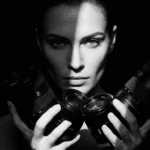
The Ultimate Guide to the Best Lenses for Boudoir Photography
Did you know that a staggering 90% of professional boudoir photographers cite lens choice as a critical factor in achieving flattering and intimate portraits? Selecting the right glass can transform a good shot into a breathtaking masterpiece, imbuing your images with depth, detail, and a captivating allure. Boudoir photography demands a unique blend of technical precision and artistic vision, where the lens acts as your most trusted tool for capturing raw emotion and exquisite form. This guide will demystify the world of lenses, helping you find the perfect companion for your boudoir adventures.
Who This Guide Is For
This article is crafted for aspiring and established boudoir photographers looking to elevate their craft. Whether you’re a seasoned pro seeking to refine your equipment choices or a beginner wondering where to invest your hard-earned cash, you’ll find valuable insights here. If you’re passionate about capturing the beauty, confidence, and sensuality of your subjects and want to understand how your lens directly impacts the final image, then this guide is tailor-made for you. We’ll delve into the technicalities without overwhelming you, focusing on practical advice that translates into stunning visuals.
Who This Guide Is NOT For
This guide isn’t for those seeking a quick fix or a single “magic bullet” lens that will instantly make them a master boudoir photographer. Photography, especially a nuanced genre like boudoir, requires practice, skill, and a deep understanding of light and composition. If you’re primarily interested in landscape, sports, or wildlife photography, the lens recommendations and discussions here might not align with your needs. Furthermore, this article assumes a basic understanding of camera operations and terminology; it’s not a beginner’s guide to photography itself.
Understanding Key Lens Characteristics for Boudoir
Choosing the right lens is akin to selecting the perfect brush for an artist. Several characteristics significantly influence the outcome of your boudoir shots. Let’s break them down.
Focal Length: The Eye of the Lens
Focal length, measured in millimeters (mm), dictates how much of a scene your lens captures and how magnified it appears. It’s arguably the most crucial factor for boudoir.
Wide-Angle Lenses (Under 35mm): These lenses offer a broad field of view. While they can be used creatively to emphasize environments or create a sense of vastness, they often introduce distortion, particularly at the edges. This distortion can be unflattering for portraits, stretching features and making subjects appear wider than they are. For boudoir, wide-angle lenses are generally not* the first choice for close-up portraits but can be useful for environmental shots that tell a story.
Standard Lenses (35mm to 70mm): This range is often considered the sweet spot for portraiture, including boudoir. Lenses in this category, like a 35mm or 50mm prime, offer a natural perspective, closely mimicking human vision. They provide a good balance between capturing the subject and a bit of the surrounding environment without significant distortion. A 50mm lens, often called the “nifty fifty,” is a favorite for its versatility and affordability.
Telephoto Lenses (Over 70mm): These lenses offer a narrower field of view and magnify distant subjects. For boudoir, longer focal lengths, such as 85mm or 105mm, are incredibly popular. They allow you to create beautiful compression, making backgrounds appear closer and softer, which is ideal for isolating your subject. They also provide flattering perspective distortion, minimizing facial feature exaggeration and producing pleasing, natural-looking portraits. An 85mm lens is a classic choice for portraits, while a 105mm or 135mm can offer even more compression and a more intimate feel.
Aperture: Controlling Light and Depth
The aperture is the opening within the lens that controls how much light reaches the camera sensor. It’s represented by an f-number (e.g., f/1.8, f/2.8, f/4). A lower f-number indicates a wider aperture, allowing more light in and creating a shallower depth of field.
Shallow Depth of Field: This is a hallmark of beautiful boudoir photography. A wide aperture (low f-number) allows you to blur the background significantly, making your subject pop. This isolation draws the viewer’s eye directly to the person, creating an intimate and focused portrait. It’s particularly effective for hiding distracting elements in the background, ensuring all attention is on your client.
Low Light Performance: Wider apertures are crucial for shooting in dimly lit environments, which are common in boudoir settings. They allow you to maintain a suitable shutter speed to avoid motion blur without significantly increasing your ISO, thus minimizing digital noise and preserving image quality. Shooting at f/1.4 or f/1.8 can make a world of difference in low-light situations.
Sharpness: While wide apertures are great for bokeh, it’s important to note that lenses are often sharpest when stopped down slightly (e.g., f/2.8 or f/4). However, for boudoir, the aesthetic benefits of a shallow depth of field at wider apertures usually outweigh the marginal loss in sharpness at the extreme ends of the lens’s capability.
Prime vs. Zoom Lenses
This is a perennial debate in photography circles. Both types have their place in a boudoir photographer’s kit.
Prime Lenses: These lenses have a fixed focal length* (e.g., 50mm, 85mm). They are often sharper, have wider maximum apertures (better for low light and bokeh), and are generally smaller and lighter than zoom lenses. Because you can’t zoom, you’re forced to “zoom with your feet,” which can encourage more intentional composition and movement around your subject. Many professional boudoir photographers swear by prime lenses for their image quality and aesthetic control. Zoom Lenses: These lenses offer a range of focal lengths* (e.g., 24-70mm, 70-200mm). They provide greater flexibility, allowing you to quickly reframe shots without moving. This can be incredibly useful when working with clients who may be less comfortable with extensive posing or when you need to capture a variety of shots in a short period. However, zoom lenses often have smaller maximum apertures and may not be as sharp as comparable prime lenses.
Top Lens Recommendations for Boudoir Photography
Based on the characteristics discussed, here are some of the most highly regarded lenses for boudoir photography, categorized by their typical focal lengths. These recommendations apply broadly across major camera brands (Canon, Nikon, Sony, etc.), though specific model numbers will vary.
The Versatile 50mm
The 50mm prime lens is a legendary performer. It’s affordable, lightweight, and offers a natural perspective that’s flattering for portraits. Its wide aperture (often f/1.8 or f/1.4) is fantastic for low light and creating creamy bokeh.
Why it’s great for boudoir: It’s incredibly versatile, suitable for full-body shots in a moderately sized room, three-quarter shots, and intimate close-ups. The perspective is very natural, avoiding the “fish-eye” effect of wider lenses and the extreme compression of longer telephotos.
Considerations: In smaller spaces, you might need to step back to fit a full subject in the frame. It doesn’t offer the dramatic background compression of an 85mm lens.
The Classic Portrait 85mm
Often hailed as the king of portrait lenses, the 85mm prime is a staple for boudoir photographers. It offers a slightly tighter field of view than a 50mm, allowing you to stand further back from your subject. This distance creates a pleasing perspective compression, flattering facial features and isolating the subject beautifully.
Why it’s great for boudoir: The flattering compression is superb. It excels at creating beautiful bokeh, smoothly blurring the background to make your subject the undeniable focus. It’s perfect for headshots, upper body portraits, and capturing intimate details.
Considerations: Requires more space than a 50mm lens to compose full-body shots. It can feel a bit too tight in very small studios or rooms.
The Intimate 105mm/135mm
These longer prime lenses offer even more compression and a more pronounced background blur. They are ideal for capturing very intimate close-ups and details, and for situations where you need to be further away from your subject, perhaps for comfort or to create a specific mood.
Why it’s great for boudoir: Unmatched compression and bokeh. They create a luxurious, dreamy feel and are perfect for capturing delicate expressions and body lines. They are excellent for isolating subjects in busy or less-than-ideal environments.
Considerations: These lenses require significant working distance, making them impractical for small spaces or full-body shots unless the room is very large. They can also be more expensive and heavier.
The Flexible Zoom: 24-70mm f/2.8
For photographers who prioritize flexibility, a high-quality 24-70mm f/2.8 zoom lens is an excellent investment. It covers the most commonly used focal lengths for portraits (35mm, 50mm, 70mm) in a single lens.
Why it’s great for boudoir: It allows you to adapt quickly to different shooting scenarios without changing lenses. You can go from a wider shot at 24mm to a tighter portrait at 70mm in an instant. The f/2.8 aperture is still wide enough for good bokeh and low-light performance, though not as extreme as f/1.4 or f/1.8 primes.
Considerations: Generally more expensive and heavier than prime lenses. The maximum aperture of f/2.8 is not as wide as many prime lenses, meaning slightly less background blur and lower light capabilities compared to, say, an 85mm f/1.4.
This lens is a powerhouse for creating compressed, flattering portraits with stunning background separation. While often associated with events and weddings, its capabilities extend beautifully to boudoir, especially in larger studios.
Why it’s great for boudoir: The compression at the longer end (135mm, 150mm, 200mm) is phenomenal, creating incredibly flattering portraits. The bokeh is often smooth and pleasing. It allows for significant working distance, which can be beneficial for making subjects feel more at ease.
Considerations: This is a large, heavy, and expensive lens. It requires substantial space to use effectively for full-body shots. It’s not ideal for tight spaces or quick, close-up work.
Beyond the Specs: Practical Considerations
While focal length and aperture are crucial, other factors can influence your lens choice.
Image Stabilization (IS/VR/OS)
Some lenses incorporate image stabilization technology, which helps counteract camera shake. This can be beneficial when shooting in low light with slower shutter speeds, reducing the risk of blurry images. However, when shooting with fast shutter speeds common in portraiture, or when using a tripod, IS is less critical.
Autofocus Speed and Accuracy
Boudoir clients are often moving subtly, changing poses, or expressing emotion. A lens with fast, quiet, and accurate autofocus is essential to capture those fleeting moments without missing focus. This is particularly important for lenses with very shallow depth of field, where even a slight misfocus can render a shot unusable.
Build Quality and Weather Sealing
While boudoir photography doesn’t typically involve harsh weather, a robustly built lens inspires confidence. If you plan to shoot in various locations or use your gear extensively, paying attention to build quality is wise.
Brand Ecosystem
If you’re invested in a particular camera brand (Canon, Nikon, Sony, Fujifilm, etc.), you’ll likely be looking at lenses designed for that system. Native lenses often offer the best performance and compatibility. Third-party manufacturers like Sigma and Tamron also produce excellent, often more affordable, alternatives for many popular mounts.
Creating the Boudoir Aesthetic with Your Lens
Your lens is more than just a piece of glass; it’s a tool for shaping perception and evoking emotion. Here’s how to leverage it.
Mastering Bokeh
Bokeh refers to the aesthetic quality of the blur in the out-of-focus parts of an image. A shallow depth of field, achieved with wide apertures and longer focal lengths, is key to achieving beautiful bokeh in boudoir. This smooth, creamy blur isolates your subject and adds a dreamy, ethereal quality to the images. Experiment with different backgrounds to see how they render in the bokeh.
Perspective Control
Compression: Longer focal lengths (85mm and up) compress the perspective, making elements in the background appear closer to the subject and minimizing the apparent distance between features on the face. This generally leads to more flattering portraits.
Natural Perspective: Standard focal lengths (50mm) offer a perspective that’s very close to how the human eye sees, resulting in a natural and relatable portrayal.
Distortion: Wide-angle lenses (under 35mm) can exaggerate perspective, making foreground elements appear larger and backgrounds smaller. While often avoided for flattering portraits, this can be used creatively for dramatic effect or environmental shots.
Capturing Detail and Emotion
High-quality lenses are sharp. This sharpness allows you to capture the subtle details – the glint in an eye, the texture of skin, the delicate curve of a shoulder – that make boudoir photography so intimate and compelling. Paired with a shallow depth of field, this sharpness ensures that these crucial details are rendered with exquisite clarity while the surrounding elements melt away.
Comparison: Popular Boudoir Lenses
Let’s put some of the top contenders head-to-head.
| Lens Type | Focal Length | Max Aperture | Strengths for Boudoir | Weaknesses for Boudoir | Typical Price Range (USD) | | :—————- | :———– | :———– | :—————————————————– | :——————————————————- | :———————— | | Prime | 50mm | f/1.8 – f/1.4 | Versatile, natural perspective, affordable, good bokeh | Requires more space for full-body, less compression | $150 – $1000+ | | Prime | 85mm | f/1.8 – f/1.4 | Flattering compression, excellent bokeh, portrait classic | Needs significant space, can be tight in small rooms | $400 – $2000+ | | Prime | 105mm | f/1.4 – f/2.8 | Extreme compression & bokeh, ideal for details | Requires large working distance, expensive, heavy | $1000 – $2500+ | | Zoom | 24-70mm | f/2.8 | Highly flexible, covers multiple focal lengths | Less bokeh than primes, heavier, expensive | $1000 – $2500+ | | Telephoto Zoom | 70-200mm | f/2.8 | Superb compression & bokeh at longer ends, versatile | Very large, heavy, expensive, requires ample space | $1000 – $2500+ |
Note: Prices are approximate and vary significantly based on brand, condition (new/used), and specific model.
Mistakes to Avoid When Choosing Your Boudoir Lens
Even with the best intentions, photographers can stumble. Here are common pitfalls to sidestep.
1. Over-reliance on Zoom Lenses
While convenient, constantly relying on a zoom lens can lead to missed opportunities for creative composition. Primes force you to engage more with your subject and environment, often resulting in more thoughtful images. Don’t let convenience overshadow artistic development.
2. Using Wide-Angle Lenses for Close-Ups
Unless you’re intentionally going for a highly stylized, distorted look, avoid using wide-angle lenses (like 16-35mm) for close-up portraits. The distortion can be very unflattering, stretching facial features and body parts, which is counterproductive in boudoir.
Boudoir thrives on a shallow depth of field to isolate the subject. If you’re consistently shooting at f/8 or f/11 for portraits, you’re missing out on the creamy bokeh and intimate feel that makes boudoir so appealing. Embrace your wide apertures!
4. Buying Based Solely on Megapixels or Brand Hype
The camera body is only part of the equation. The lens is where the magic happens. Don’t get swayed by the latest camera releases if your current lenses aren’t serving your boudoir vision. Focus on acquiring lenses that align with the aesthetic you want to achieve.
5. Not Considering the Shooting Environment
A 200mm lens might be fantastic in a spacious studio, but it’s a paperweight in a cramped hotel room. Always consider the typical spaces where you’ll be shooting. A versatile 50mm or 85mm prime, or a 24-70mm zoom, might be more practical for varied environments.
Actionable Checklist for Selecting Your Next Boudoir Lens
Use this checklist to guide your decision-making process:
[ ] Define Your Primary Use: Will this lens be for close-ups, full body, or both? What’s your typical shooting environment (studio, home, hotel)?
[ ] Prioritize Focal Length: Based on your environment and desired look, do you lean towards 50mm, 85mm, or a zoom range?
[ ] Consider Aperture Needs: How important is extremely shallow depth of field and low-light capability? Do you need f/1.4 or is f/2.8 sufficient?
[ ] Prime vs. Zoom Preference: Do you value ultimate image quality and bokeh (prime), or flexibility and speed (zoom)?
[ ] Set a Budget: Lenses range from a few hundred to several thousand dollars. Determine what you can realistically invest.
[ ] Research Specific Models: Look for reviews and sample images from reputable photography sites for lenses compatible with your camera system.
[ ] Rent Before Buying: If possible, rent a lens for a session to test its performance in real-world boudoir scenarios.
[ ] Read User Reviews: See what other boudoir photographers are saying about the lenses you’re considering.
Conclusion
Choosing the best lens for boudoir photography is a deeply personal journey, intertwined with your artistic style and practical needs. While the 85mm f/1.4 often reigns supreme for its flattering compression and dreamy bokeh, the versatility of a 50mm prime or the adaptability of a 24-70mm f/2.8 zoom cannot be overlooked. Ultimately, the “best” lens is the one that empowers you to capture the confidence, beauty, and intimacy your clients seek. Don’t be afraid to experiment, rent gear, and trust your instincts. The right lens will not only enhance your images but also elevate the entire boudoir experience for your clients, turning fleeting moments into timeless art.
Frequently Asked Questions (FAQs)
What focal length is generally considered the most flattering for boudoir photography?
The 85mm focal length is widely regarded as the most flattering for boudoir. It provides a natural perspective with pleasing compression, minimizing distortion and creating a beautiful separation between the subject and the background, thanks to its ability to achieve a shallow depth of field.
Can I use a wide-angle lens for boudoir photography?
While wide-angle lenses (e.g., 24mm, 35mm) can be used creatively in boudoir, they are generally not recommended for portraits, especially close-ups. They tend to distort features and exaggerate perspective, which can be unflattering. They might work for environmental shots that emphasize the setting, but not for intimate portraits.
What is the advantage of using prime lenses over zoom lenses for boudoir?
Prime lenses often feature wider maximum apertures (like f/1.4 or f/1.8) compared to most zoom lenses. This allows for a shallower depth of field, resulting in creamier bokeh and better subject isolation. Primes are also typically sharper and lighter than their zoom counterparts, though they lack the flexibility of zoom ranges.
Is image stabilization important for boudoir lenses?
Image stabilization (IS) can be helpful when shooting in low-light conditions with slower shutter speeds to prevent camera shake. However, in boudoir, photographers often use faster shutter speeds and ample lighting, making IS less critical. For static shots on a tripod, it’s generally unnecessary.
How does aperture affect boudoir photos?
Aperture controls both the amount of light entering the lens and the depth of field. In boudoir, photographers often use wide apertures (low f-numbers like f/1.4, f/1.8, f/2.8) to create a shallow depth of field. This blurs the background significantly, drawing attention to the subject and creating a soft, intimate aesthetic.
Should I invest in a 50mm or an 85mm lens first for boudoir?
For beginners in boudoir, a 50mm lens is often a great starting point due to its versatility and affordability. It works well in various spaces. However, if your primary goal is the most flattering portrait compression and bokeh, the 85mm is often considered the superior choice, provided you have adequate space to work with.
George Margas is the founder and lead content creator at 335mm.com. With over a decade of experience in photography and a keen interest in optical technology, George combines technical expertise with practical insights to help photographers make informed decisions about their gear. As the owner of gemweb media agency, he brings a unique perspective on digital content creation and the evolving landscape of visual media. When not writing about lenses or testing the latest camera equipment, George can be found exploring new photography techniques and sharing his knowledge through workshops and online tutorials.
We use cookies to personalise content and ads, to provide social media features and to analyse our traffic. We also share information about your use of our site with our social media, advertising and analytics partners. View more
Suggested text: When visitors leave comments on the site we collect the data shown in the comments form, and also the visitor’s IP address and browser user agent string to help spam detection.An anonymized string created from your email address (also called a hash) may be provided to the Gravatar service to see if you are using it. The Gravatar service privacy policy is available here: https://automattic.com/privacy/. After approval of your comment, your profile picture is visible to the public in the context of your comment.
Media
Suggested text: If you upload images to the website, you should avoid uploading images with embedded location data (EXIF GPS) included. Visitors to the website can download and extract any location data from images on the website.
Cookies
Suggested text: If you leave a comment on our site you may opt-in to saving your name, email address and website in cookies. These are for your convenience so that you do not have to fill in your details again when you leave another comment. These cookies will last for one year.If you visit our login page, we will set a temporary cookie to determine if your browser accepts cookies. This cookie contains no personal data and is discarded when you close your browser.When you log in, we will also set up several cookies to save your login information and your screen display choices. Login cookies last for two days, and screen options cookies last for a year. If you select "Remember Me", your login will persist for two weeks. If you log out of your account, the login cookies will be removed.If you edit or publish an article, an additional cookie will be saved in your browser. This cookie includes no personal data and simply indicates the post ID of the article you just edited. It expires after 1 day.
Embedded content from other websites
Suggested text: Articles on this site may include embedded content (e.g. videos, images, articles, etc.). Embedded content from other websites behaves in the exact same way as if the visitor has visited the other website.These websites may collect data about you, use cookies, embed additional third-party tracking, and monitor your interaction with that embedded content, including tracking your interaction with the embedded content if you have an account and are logged in to that website.
Who we share your data with
Suggested text: If you request a password reset, your IP address will be included in the reset email.
How long we retain your data
Suggested text: If you leave a comment, the comment and its metadata are retained indefinitely. This is so we can recognize and approve any follow-up comments automatically instead of holding them in a moderation queue.For users that register on our website (if any), we also store the personal information they provide in their user profile. All users can see, edit, or delete their personal information at any time (except they cannot change their username). Website administrators can also see and edit that information.
What rights you have over your data
Suggested text: If you have an account on this site, or have left comments, you can request to receive an exported file of the personal data we hold about you, including any data you have provided to us. You can also request that we erase any personal data we hold about you. This does not include any data we are obliged to keep for administrative, legal, or security purposes.
Where your data is sent
Suggested text: Visitor comments may be checked through an automated spam detection service.