Top Picks: Best Lenses for Group Portaits
Straight lines and clean perspective matter most when shooting interiors. These three cover the range from professional tilt-shift control to versatile mirrorless wide-angle zooms.
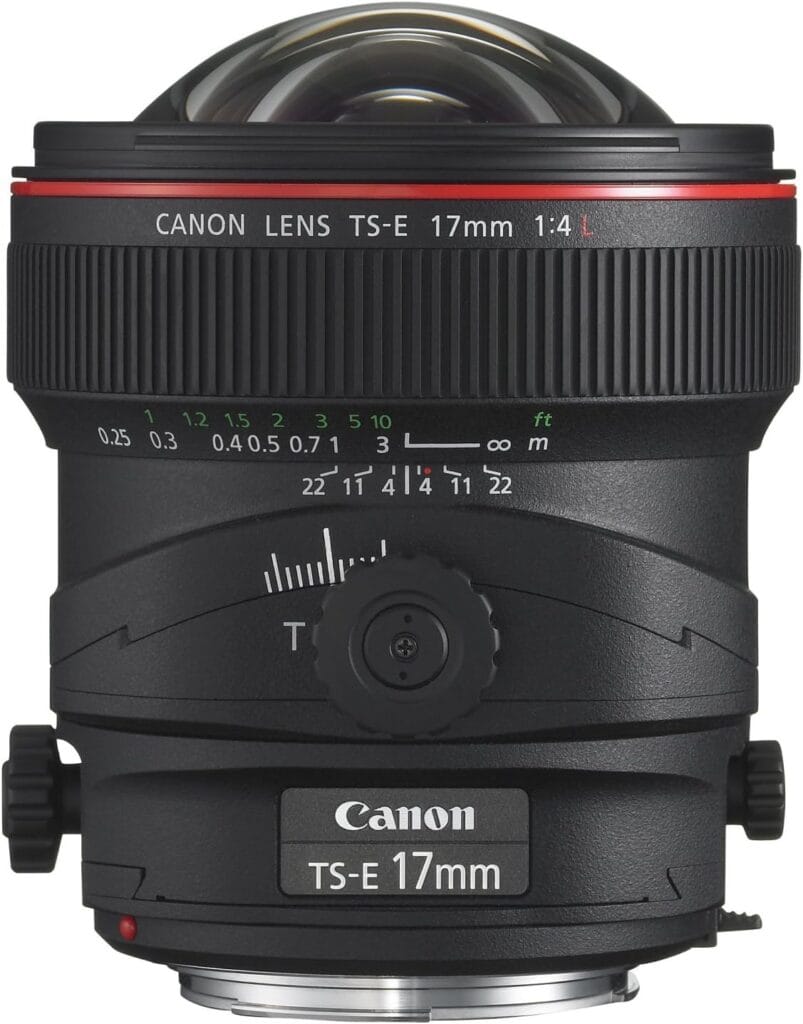
Canon TS-E 17mm f/4L
One of the most respected lenses for professional interiors. Tilt-shift control keeps vertical lines straight, with excellent corner sharpness and minimal distortion — manual focus only.

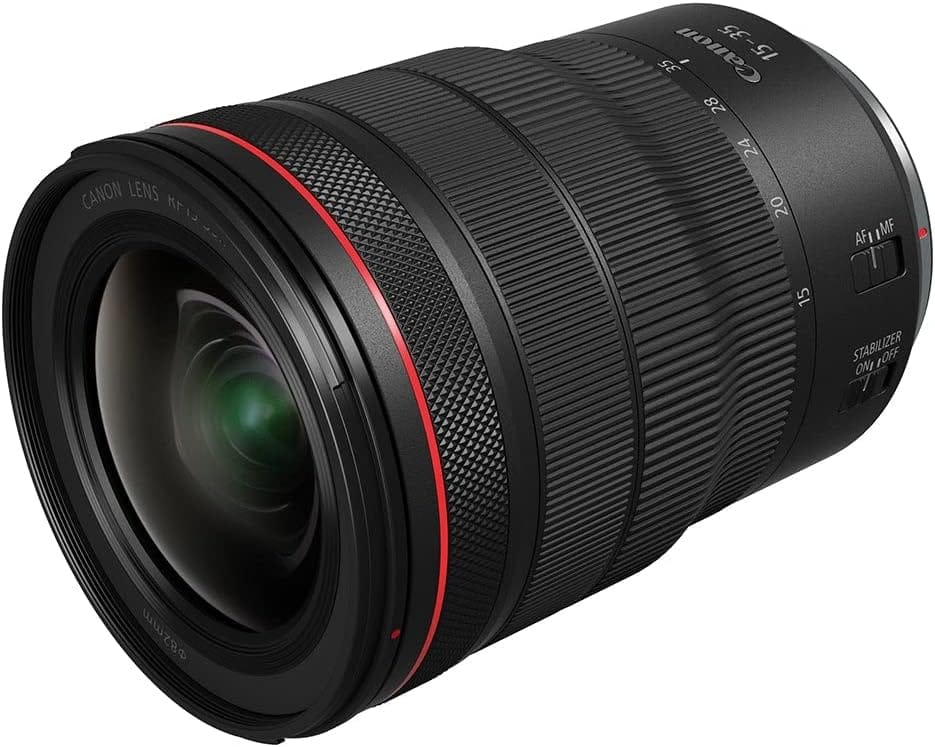
Canon RF 15-35mm f/2.8L IS USM
A useful zoom range for interiors — 15mm fits large rooms, 35mm frames tighter spaces without excessive distortion.
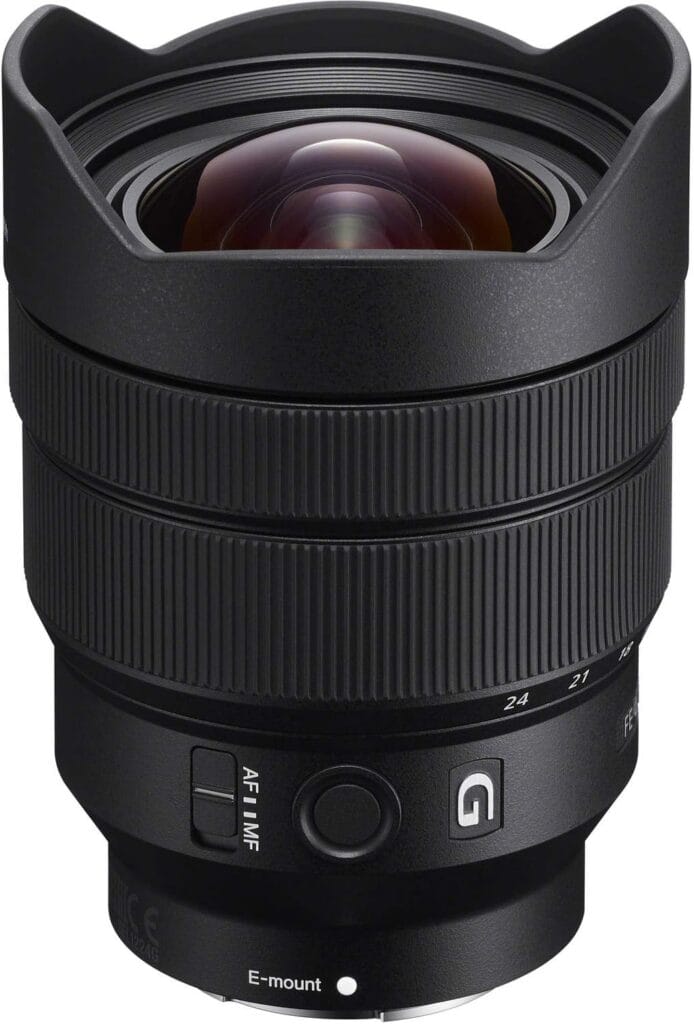
Sony 12-24mm f/4 G
Goes wider than most at 12mm, giving plenty of room in small spaces. Well-built and sharp, with an f/4 aperture well suited to tripod work.
The Best Lens for Group Portraits: Capturing Everyone in the Frame
Did you know that a poorly chosen lens can make your group photos look distorted, with some people appearing unnaturally large and others tiny? It’s a common pitfall for photographers aiming to capture cohesive and flattering group portraits. Finding the right lens is crucial for ensuring everyone looks their best, from the tallest uncle to the littlest cousin.
This guide dives deep into what makes a lens ideal for group photography. We’ll explore the technical aspects, offer concrete recommendations, and help you avoid those pesky distortion issues that can ruin an otherwise great shot. Whether you’re a seasoned pro or just starting, understanding lens choice can elevate your group portraits from ‘okay’ to ‘absolutely stunning’.
Who This Is For
This article is meticulously crafted for photographers of all levels who frequently find themselves tasked with capturing group portraits. This includes:
- Wedding photographers needing to gather families and wedding parties efficiently and beautifully.
- Event photographers documenting corporate events, reunions, or parties where group shots are essential.
- Family photographers specializing in capturing extended family gatherings.
- Hobbyist photographers who want to improve their skills in capturing candid or posed group moments at holidays, birthdays, or casual get-togethers.
- Anyone looking to buy a new lens specifically with group portraiture in mind and needing guidance on focal length, aperture, and specific model recommendations.
Who This Is NOT For
While we aim for broad appeal, this guide might not be your primary resource if:
- You’re primarily interested in wildlife photography, macro photography, or astrophotography. These genres demand entirely different lens characteristics.
- You’re only interested in single-subject portraits. While many portrait lenses can work, the specific needs of group shots (wider field of view, minimizing distortion) are our focus.
- You’re looking for a highly specialized fisheye lens for artistic, extremely wide-angle effects that intentionally distort. Our goal is usually the opposite: to minimize distortion.
- You’re a smartphone user solely relying on your phone’s built-in camera. While phone cameras have improved, the principles of lens selection and focal length still apply conceptually, but the hardware is fixed.
Understanding the Core Needs of Group Portrait Lenses
Capturing a group means fitting multiple people into a single frame while maintaining pleasing perspectives. This isn’t just about cramming everyone in; it’s about how they appear within that frame. Several key factors come into play, acting like the ingredients in a recipe for a perfect group shot.
Focal Length: The Magic Number
Focal length, measured in millimeters (mm), dictates how much of a scene your lens captures – its field of view. It also influences perspective, which is critical for group photos. Too wide, and people at the edges stretch like taffy. Too long, and you’ll need to stand miles away, losing connection with your subjects.
- Wide-Angle Lenses (e.g., 24mm-35mm on full-frame): These lenses offer a broad perspective, allowing you to fit more people into the frame without backing up excessively. They are fantastic for larger groups or when space is limited. However, they can introduce distortion, especially at the edges, making noses look larger or bodies appear stretched. Careful composition is key.
- Standard or ‘Normal’ Lenses (e.g., 50mm on full-frame): A 50mm lens on a full-frame camera provides a field of view similar to human vision. It’s versatile and generally produces very natural perspectives with minimal distortion. It’s a solid choice for smaller to medium-sized groups, especially if you have a bit of space to work with.
- Short Telephoto Lenses (e.g., 70mm-135mm on full-frame): These lenses compress perspective, making backgrounds appear closer and subjects stand out more. They are excellent for flattering portraits, as they minimize facial distortion. However, they require more distance from the group, which can be a challenge in tight spaces.
Key takeaway: For group portraits, you’re typically looking for a focal length that balances fitting everyone in with minimizing distortion. This often lands you in the wide-angle to standard range (roughly 24mm to 70mm on full-frame), with some flexibility depending on the group size and shooting environment.
Aperture: Controlling Light and Depth
Lens aperture, denoted by f-numbers (like f/1.8, f/2.8, f/8), controls how much light enters the camera and the depth of field (how much of the image is in sharp focus). For group portraits, aperture plays a dual role:
- Low Light Performance: A wider aperture (smaller f-number, e.g., f/1.8) lets in more light, which is beneficial in dimly lit venues or during evening shoots. This can help you maintain a faster shutter speed, preventing motion blur.
Depth of Field: This is arguably more critical for groups. You want everyone in the group to be in focus, from the front row to the back. This means you’ll generally need a narrower* aperture (larger f-number, e.g., f/5.6, f/8, or even f/11). A very wide aperture (like f/1.8) is usually too shallow for groups, as only a thin slice of the scene will be sharp, leaving many people out of focus. It’s the photographer’s challenge to find the sweet spot.
Key takeaway: While fast lenses (wide apertures) are great for single portraits, for groups, you’ll often be stopping down to f/5.6 or f/8 to ensure adequate depth of field. However, a lens that can open wide is still valuable for versatility.
Image Stabilization (IS) / Vibration Reduction (VR)
Some lenses include built-in image stabilization. This technology helps counteract camera shake, allowing you to shoot at slower shutter speeds without introducing blur. While not as critical for group portraits as it is for handheld telephoto shots, it can be helpful, especially in lower light conditions where you might be forced to use slower shutter speeds to achieve proper exposure and depth of field.
Top Lens Recommendations for Group Portraits
Based on the needs of group portraiture, here are some highly regarded lens types and specific examples that consistently deliver excellent results. We’ll consider both zoom and prime lenses, as each has its advantages.
Zoom Lenses: Versatility in Action
Zoom lenses offer the flexibility to change your focal length without changing lenses. This is incredibly useful when shooting groups, as you might need to adjust your position or framing on the fly.
- 24-70mm f/2.8 (Full-Frame Equivalent): This is often considered the workhorse lens for many professional photographers, and it’s a fantastic choice for group portraits. The 24mm end offers a wide enough perspective for larger groups or tighter spaces, while the 70mm end provides a more flattering, slightly compressed look for smaller groups or individuals within a larger setup. The f/2.8 aperture is fast enough for many situations, though you’ll likely be shooting at f/5.6-f/8 for optimal group sharpness.
- Pros: Extremely versatile, excellent image quality, constant aperture across the zoom range.
- Cons: Can be large, heavy, and expensive.
- Examples: Canon EF 24-70mm f/2.8L II USM, Nikon AF-S NIKKOR 24-70mm f/2.8E ED VR, Sony FE 24-70mm f/2.8 GM II.
- 24-105mm f/4 (Full-Frame Equivalent): This lens offers even more reach than the 24-70mm, making it suitable for a wider range of group sizes and distances. The f/4 aperture is slightly slower than f/2.8, meaning it needs more light or a slower shutter speed, but it’s still very capable, and often more affordable and lighter than its f/2.8 counterpart. For group portraits, the difference in aperture is often negligible when you’re shooting at f/8 anyway.
- Pros: Excellent range, good image quality, often more affordable and lighter than f/2.8 versions.
- Cons: Slower maximum aperture, might be a bit softer at the extreme ends compared to premium zooms.
- Examples: Canon EF 24-105mm f/4L IS II USM, Nikon NIKKOR Z 24-105mm f/4 S, Sony FE 24-105mm f/4 G OSS.
- 16-35mm f/2.8 or f/4 (Full-Frame Equivalent): If you frequently shoot very large groups or in extremely confined spaces, an ultra-wide zoom can be a lifesaver. The 16-35mm range pushes the boundaries of wide-angle, allowing you to capture massive assemblies. However, extreme wide-angle lenses demand the most careful handling to avoid distortion. You’ll want to keep people away from the extreme edges and ensure they are relatively close to the same plane of focus.
- Pros: Captures very wide scenes, excellent for large groups and tight spaces.
- Cons: High potential for distortion, requires careful composition, can be expensive.
- Examples: Canon EF 16-35mm f/2.8L III USM, Nikon AF-S FX NIKKOR 16-35mm f/4G ED VR, Sony FE 16-35mm f/2.8 GM.
Prime Lenses: Simplicity and Sharpness
Prime lenses have a fixed focal length. They often offer superior image quality, wider maximum apertures, and are typically smaller and lighter than zooms. For group portraits, you might choose a prime that falls within the ideal focal length range.
- 35mm f/1.8 or f/1.4 (Full-Frame Equivalent): A 35mm lens is a classic wide-normal focal length. It offers a slightly wider perspective than a 50mm, making it great for fitting in smaller to medium-sized groups, especially indoors. The wide apertures are less critical for depth of field in group shots but are excellent for low light and can be used creatively for shallower depth of field if only a few subjects are near the focal plane.
- Pros: Excellent image quality, great in low light, relatively compact.
- Cons: Fixed focal length requires “zooming with your feet,” can exhibit some wide-angle distortion if not used carefully.
- Examples: Canon EF 35mm f/1.4L II USM, Nikon NIKKOR Z 35mm f/1.8 S, Sony FE 35mm f/1.4 GM.
- 50mm f/1.8 or f/1.4 (Full-Frame Equivalent): The “nifty fifty” is a beloved lens for its affordability, sharpness, and natural perspective. It’s ideal for smaller groups (3-5 people) where you can position yourself at a comfortable distance. It renders subjects very naturally with minimal distortion. While its f/1.8 aperture is too shallow for most group shots, stopping down to f/5.6 or f/8 yields excellent results.
- Pros: Affordable, sharp, lightweight, natural perspective, excellent in low light.
- Cons: Fixed focal length, requires more distance for larger groups.
- Examples: Canon EF 50mm f/1.8 STM, Nikon AF-S NIKKOR 50mm f/1.8G, Sony FE 50mm f/1.8.
- 85mm f/1.8 or f/1.4 (Full-Frame Equivalent): While often considered a prime portrait lens for individuals, an 85mm can work beautifully for smaller groups (2-4 people) when you have ample space. It offers excellent subject isolation and flattering compression. You’ll need to be further back, but the results can be stunningly sharp with beautiful bokeh.
- Pros: Highly flattering perspective, excellent subject separation, superb image quality.
- Cons: Requires significant distance, not suitable for larger groups or tight spaces.
- Examples: Canon EF 85mm f/1.8 USM, Nikon AF-S NIKKOR 85mm f/1.8G, Sony FE 85mm f/1.8.
APS-C vs. Full-Frame Considerations
Lens focal lengths are often quoted for full-frame cameras. If you’re shooting with an APS-C (crop sensor) camera, you need to account for the “crop factor.” This factor (typically 1.5x or 1.6x) effectively magnifies the focal length.
- Example: A 35mm lens on an APS-C camera behaves like a 50mm or 56mm lens on a full-frame camera (35mm x 1.5 or 1.6). This means a lens that might be considered wide-angle on full-frame could be standard or even short telephoto on APS-C.
For APS-C cameras, to achieve a similar field of view as a full-frame lens for group portraits:
- A 17-50mm f/2.8 zoom is often the APS-C equivalent of a 24-70mm f/2.8 full-frame zoom.
- A 24mm prime on APS-C gives a field of view similar to a 35mm on full-frame.
- A 35mm prime on APS-C gives a field of view similar to a 50mm on full-frame.
Always check the equivalent full-frame focal length when choosing a lens for your specific camera sensor size.
Practical Tips for Shooting Group Portraits
Beyond choosing the right lens, several techniques will ensure your group photos are successful. These are the little tricks that separate a snapshot from a polished portrait.
1. Scout Your Location Wisely
Before the group assembles, find a spot with good, even lighting. Avoid direct, harsh sunlight which creates unflattering shadows and makes people squint. Overcast days are a photographer’s best friend for group shots. Look for a clean, uncluttered background that won’t distract from your subjects. Consider the background’s depth – a slightly distant background can help your subjects pop.
2. Position Your Subjects Thoughtfully
- Stagger heights: Have taller people stand or sit behind shorter individuals. Create layers rather than a single flat line.
- Overlap slightly: Encourage people to stand close enough to touch shoulders or arms. This creates a sense of connection and makes the group look unified.
- Vary poses: Mix standing, sitting, and leaning. Avoid stiff, rigid postures.
- Fill the frame: Ensure there are no large gaps of empty space within the group.
3. Master Your Camera Settings
- Aperture: As discussed, aim for f/5.6 to f/8 (or even f/11 for very large, deep groups) to ensure everyone is in focus. Use your camera’s depth of field preview if available.
- Shutter Speed: Keep it fast enough to prevent motion blur (at least 1/125s, preferably faster). If you need a slower shutter speed due to low light, ensure your subjects are very still or use a tripod.
- ISO: Keep it as low as possible to minimize noise, but don’t be afraid to increase it if necessary to achieve a proper exposure with your chosen aperture and shutter speed.
Focus: Focus on the eyes of the person in the front row* closest to the camera, or on the middle of the group if it’s arranged in depth. Use your camera’s single-point autofocus for precision.
4. Communicate Clearly
Direct your subjects with confidence and a friendly demeanor. Give clear, concise instructions. Tell people where to look, when to smile, and when to relax. A little bit of direction goes a long way.
5. Shoot in Bursts
People blink, cough, or make funny faces at the worst possible moment. Shooting in continuous (burst) mode increases your chances of capturing a frame where everyone looks their best. You can always delete the extras later.
Mistakes to Avoid
Even with the best lens, certain common errors can sabotage your group portraits. Steer clear of these pitfalls for consistently better results.
1. Using an Ultra-Wide Lens Too Close
While ultra-wide lenses (like 16mm or 18mm) can fit everyone, standing too close to a large group will cause significant distortion. People at the edges will look stretched and unnatural. If you must use an ultra-wide, step back as far as possible and keep subjects away from the extreme edges of the frame.
2. Using a Telephoto Lens in a Tight Space
A long telephoto lens (like 200mm) requires a lot of distance. If you’re shooting indoors or in a confined area, you simply won’t be able to back up far enough to get the whole group in focus. This leads to either a very tight crop or extreme compression that might not be flattering.
3. Relying Solely on Automatic Settings
Auto mode often prioritizes a wide aperture for single subjects, which is exactly what you don’t want for groups needing deep depth of field. Take control of your aperture, shutter speed, and focus settings for consistent, sharp results.
4. Poor Lighting Choices
Shooting directly under a midday sun creates harsh shadows and squinting. Conversely, shooting in very dark conditions without adequate light or a high enough ISO will result in blurry, noisy images. Find balanced, diffused light.
5. Neglecting the Background
A distracting background (e.g., a messy room, a bright sign) can pull attention away from your subjects. Always be mindful of what’s behind your group and try to simplify it.
Comparison: Zoom vs. Prime Lenses for Groups
Here’s a quick look at the pros and cons of zoom versus prime lenses specifically for group portraiture:
| Feature | Zoom Lens (e.g., 24-70mm) | Prime Lens (e.g., 35mm, 50mm) |
| :—————- | :——————————————————- | :——————————————————– |
| Versatility | High – easily adjust focal length for different group sizes. | Low – fixed focal length requires moving your feet. |
| Image Quality | Very good to excellent, though often slightly less sharp than primes. | Excellent to superb, often sharper with better contrast. |
| Low Light | Good (f/2.8) to Moderate (f/4). | Excellent (f/1.4, f/1.8) – useful for other scenarios. |
| Depth of Field| Can achieve f/8 or f/11 needed for groups. | Can achieve f/8 or f/11 needed for groups. |
| Size & Weight | Generally larger and heavier. | Typically smaller and lighter. |
| Cost | Can be very expensive (f/2.8 versions). | Often more affordable, especially the 50mm f/1.8. |
| Distortion | Can vary, but generally well-controlled within range. | Varies by focal length; 35mm has more than 50mm. |
| Best For | Events, unpredictable environments, varied group sizes. | Smaller groups, controlled environments, prioritizing quality. |
Actionable Checklist for Choosing Your Group Portrait Lens
Use this checklist to guide your lens selection process:
- [ ] What camera system do you use (Canon, Nikon, Sony, etc.)? (Ensures compatibility)
- [ ] What is your camera’s sensor size (Full-Frame or APS-C)? (Crucial for understanding effective focal length)
- [ ] What is the typical size of the groups you photograph? (Small families vs. large wedding parties)
- [ ] How much space do you typically have to work in? (Tight indoor spaces vs. open outdoor areas)
- [ ] What is your budget? (Lenses range from a couple hundred to over two thousand dollars)
- [ ] Do you prioritize versatility (zoom) or ultimate image quality/low light (prime)?
- [ ] Are you comfortable “zooming with your feet” (prime lens user) or do you prefer flexibility?
Based on your answers, you can narrow down the focal lengths and types of lenses that will best suit your needs.
Conclusion
Selecting the best lens for group portraits is a balancing act. You need a focal length that allows you to capture everyone without resorting to extreme wide-angle distortion or requiring an impractical amount of space. Lenses in the 24mm to 70mm range on full-frame cameras (or their APS-C equivalents) are generally the most versatile and effective choices. Whether you opt for the flexibility of a zoom or the pristine quality of a prime, remember that thoughtful composition, good lighting, and clear communication are just as vital as the gear itself. By understanding these elements, you’ll be well on your way to capturing memorable, flattering group portraits every time.
Frequently Asked Questions (FAQs)
1. What is the single most versatile lens for group portraits?
The 24-70mm f/2.8 zoom lens is widely considered the most versatile lens for group portraits on a full-frame camera. It offers a broad range of focal lengths, from wide-angle to short telephoto, allowing you to adapt to different group sizes and shooting environments. Its constant f/2.8 aperture is useful, though you’ll typically stop down to f/5.6-f/8 for sufficient depth of field in group shots.
2. Can I use my 50mm prime lens for group photos?
Yes, absolutely! A 50mm prime lens on a full-frame camera is excellent for small to medium-sized groups (typically 3-5 people). It provides a natural perspective with minimal distortion. For larger groups, you’ll need to step back further, which might not always be feasible. Remember to stop down the aperture to f/5.6 or f/8 to ensure everyone is in focus.
3. How do I avoid distortion in group photos?
To avoid distortion, especially with wide-angle lenses:
- Choose an appropriate focal length: Avoid extremely wide angles (below 24mm on full-frame) unless absolutely necessary and you’re far back.
- Maintain distance: The further you are from your subjects, the less distortion you’ll see.
- Keep subjects away from the edges: Distortion is most pronounced at the edges of the frame.
- Shoot at eye level: Shooting from too high or too low can also introduce perspective distortion.
- Use prime lenses in the 35mm-50mm range: These generally offer the most natural perspective with minimal distortion.
4. Is an f/4 lens good enough for group portraits, or do I need f/2.8?
An f/4 lens is often perfectly adequate for group portraits. While f/2.8 lenses are faster (let in more light) and can offer slightly better background blur for single subjects, for group shots, you’ll be stopping down to f/5.6 or f/8 anyway to get everyone in focus. The difference between f/2.8 and f/4 at these smaller apertures is negligible. An f/4 zoom often offers a great balance of range, image quality, and cost.
5. What about lenses for mirrorless APS-C cameras like the Fujifilm X-T4 or Sony a6600?
For mirrorless APS-C cameras, you’ll be looking for lenses with focal lengths that account for the crop factor (typically 1.5x). A great all-around choice is often a 16-55mm f/2.8 lens, which provides a field of view equivalent to a 24-70mm f/2.8 on a full-frame camera. Alternatively, a 17-70mm f/2.8 or similar kit lens can also work well, offering a bit more reach. Prime lenses like a 23mm f/1.4 (equivalent to ~35mm full-frame) are also excellent options for smaller groups.
6. Should I use a tripod for group portraits?
Using a tripod is highly recommended, especially for larger groups or in lower light conditions. It ensures your camera is perfectly still, allowing you to use slower shutter speeds if needed without introducing camera shake. A tripod also helps you maintain a consistent shooting position and framing, which is invaluable when trying out different compositions or taking multiple shots. It frees you up to focus on directing your subjects rather than worrying about handheld stability.
Related Posts: