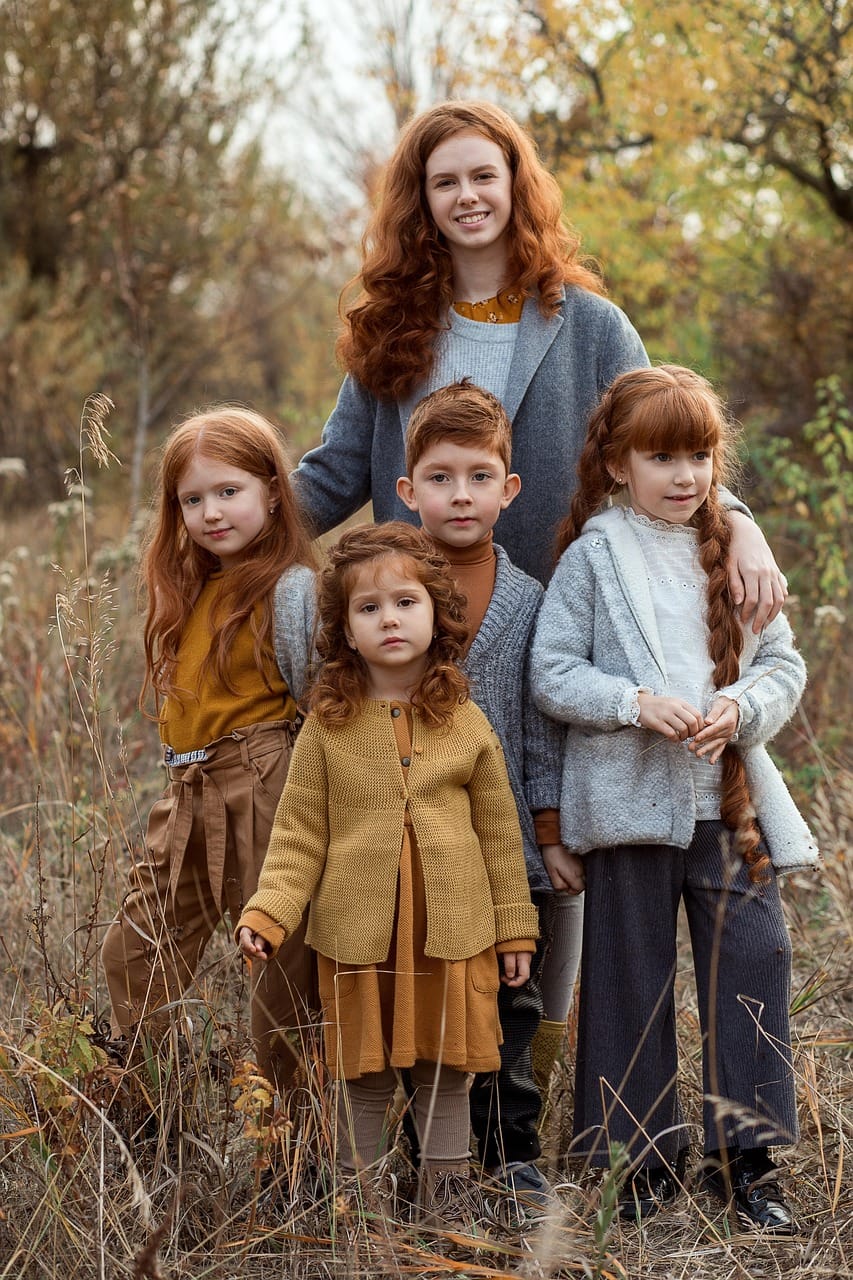
Family portraits matter. Whether it’s a holiday photo, a birthday session, or just a casual backyard shoot, you want sharp, flattering images. And the lens you use makes a huge difference.
This guide covers the best lens for family portraits — what to look for, which focal lengths work, and specific recommendations for different budgets and camera systems.
Why the Lens Matters More Than the Camera Body
Most people upgrade their camera body when they should be upgrading their lens. A decent camera with a great lens will beat an expensive camera with a kit lens almost every time.
For family portraits specifically, the lens affects:
Sharpness — can it render faces clearly at a wide aperture?
Background blur (bokeh) — does it separate your subjects from the background nicely?
Distortion — does it make faces look natural or warped?
Speed — can it focus fast enough when kids are moving?
Get these right and your portraits will look significantly better.
What Focal Length Works Best for Family Portraits?
This is the most common question. Here’s a straightforward breakdown.
35mm — Good for Environmental Portraits
A 35mm lens captures more of the scene. It works well when you want to show the family in a location — their home, a park, a beach. It’s not the best choice for tight headshots because it can slightly distort facial features when you get close.
But for a relaxed, lifestyle-style family session, 35mm is a solid pick. You don’t need much room to work, and you can capture wider group shots without backing up too far.
50mm — The Natural Choice
The 50mm focal length is close to what the human eye sees. That means faces look natural and proportions are accurate. It’s versatile enough for both group shots and individual portraits.
If you can only own one lens for family portraits, a 50mm is often the best starting point. It’s also usually one of the more affordable options in any lens lineup.
85mm — The Classic Portrait Focal Length
The 85mm is widely considered the best focal length for portraits, and for good reason. It creates flattering compression, which means facial features look more proportional and noses appear smaller. The background falls out of focus nicely even at moderate apertures.
The trade-off is working distance. You need more room to back up and get full-group shots. In a small indoor space, this can be limiting.
70–200mm — Flexible and Powerful
A 70–200mm zoom gives you range. You can shoot tight portraits at 200mm or pull back to 70mm for wider group compositions. It’s a popular choice among professional family photographers because of its flexibility.
It’s heavier and more expensive than prime lenses, but the versatility is hard to beat in a paid session where you need to move quickly.
Best Lenses for Family Portraits by Category
Best Overall: 85mm f/1.8
For most photographers shooting family portraits, an 85mm f/1.8 is the sweet spot. It gives you excellent sharpness, beautiful background separation, and flattering compression — all without the high price of an f/1.4 version.
Canon RF 85mm f/2 Macro IS STM — A sharp, image-stabilized lens that performs well in lower light. The f/2 aperture is slightly slower than some alternatives, but the IS helps compensate. Great for Canon mirrorless shooters.
Nikon Z 85mm f/1.8 S — One of the sharpest 85mm lenses available. It focuses quickly and handles well. A top pick for Nikon Z-series cameras.
Sony FE 85mm f/1.8 — A budget-friendly option for Sony E-mount shooters. It’s not as fast focusing as the GM version, but for portraits where subjects aren’t constantly moving, it does an excellent job.
Sigma 85mm f/1.4 DG DN Art — Available for Sony and L-mount cameras. It’s heavier but delivers outstanding image quality and a very smooth bokeh.
Best Budget Option: 50mm f/1.8
Every major camera manufacturer makes a 50mm f/1.8 that costs well under $300. These lenses punch above their weight class for portrait work.
Canon RF 50mm f/1.8 STM — Compact, lightweight, and sharp. For Canon R-system shooters on a budget, this is hard to beat.
Nikon Z 50mm f/1.8 S — Exceptional quality for the price. Noticeably sharper and better built than entry-level alternatives.
Sony FE 50mm f/1.8 — A capable lens that’s among the most affordable in Sony’s lineup. Autofocus is decent but not the fastest for moving kids.
If you’re just getting started with portrait photography or you shoot family portraits occasionally, a 50mm f/1.8 from your camera’s native system is a smart first purchase.
Best for Indoor Family Sessions: 35mm f/1.4 or f/1.8
Indoor spaces are tight. An 85mm inside a living room often means you’re pressed against the back wall just to fit everyone in the frame. A 35mm solves that problem.
At f/1.4 or f/1.8, it lets in enough light to shoot without harsh flash. And modern 35mm lenses handle distortion well enough that faces look natural as long as you’re not getting extremely close.
Sigma 35mm f/1.4 DG DN Art — Available for Sony E-mount and L-mount. Excellent sharpness and a proven performer for indoor work.
Nikon Z 35mm f/1.8 S — Fast, accurate autofocus and a great rendering. Works well for lifestyle portraits inside the home.
Canon RF 35mm f/1.8 Macro IS STM — A compact option with image stabilization. Not as fast as f/1.4 alternatives, but the IS helps when shooting handheld in dim rooms.
Best Zoom for Family Portraits: 70–200mm f/2.8
If you shoot family portraits regularly or professionally, a 70–200mm zoom is worth considering. It gives you creative flexibility to shift between tight portraits and wider compositions without swapping lenses.
Sony FE 70–200mm f/2.8 GM OSS II — One of the best zoom lenses available. Fast, sharp, and handles beautifully. It’s expensive, but it’s a professional tool that will last for years.
Tamron 70–180mm f/2.8 Di III VXD — A more affordable alternative for Sony shooters. Slightly shorter reach, but noticeably lighter. Many photographers prefer it for the portability.
Nikon Z 70–200mm f/2.8 VR S — Excellent image stabilization and sharp across the zoom range. A strong choice for Nikon Z-system users.
Canon RF 70–200mm f/2.8 L IS USM — One of the more compact 70–200mm f/2.8 lenses. Fast autofocus and sharp throughout.
Best for DSLR Shooters: Third-Party Options
If you’re still shooting with a DSLR and not ready to switch to mirrorless, you have strong options from Sigma and Tamron.
Sigma 85mm f/1.4 DG HSM Art (EF/F-mount) — A high-performing portrait lens available for Canon EF and Nikon F mounts. Heavier than native options, but the image quality is exceptional.
Tamron SP 85mm f/1.8 Di VC USD (EF/F-mount) — Includes image stabilization, which is rare at this focal length. Good sharpness and a well-controlled rendering.
Sigma 50mm f/1.4 DG HSM Art (EF/F-mount) — If you want a 50mm that outperforms the native options, this is it. Sharp from corner to corner and well-built.
Aperture: How Wide Do You Need to Go?
A lot of photographers assume they need f/1.4 to shoot family portraits. In most cases, f/1.8 or even f/2.8 is plenty.
Here’s why: when you’re photographing a group — even just two or three people — shooting wide open at f/1.4 means some faces may fall slightly out of focus. Depth of field gets very shallow at that aperture.
For single-subject portraits, f/1.4 or f/1.8 is great. For groups, stop down to f/2.8, f/4, or even f/5.6 to keep everyone sharp. The background will still look separated from the subjects at these apertures if you’re using a longer focal length like 85mm or 135mm.
What About Image Stabilization?
Image stabilization (IS, VR, OSS, depending on the brand) helps when you’re shooting handheld in lower light. For fast-moving children, though, IS doesn’t compensate for subject motion blur — only a faster shutter speed does that.
IS is most useful for:
Indoor portraits in dim light where you’re shooting handheld
Video work where camera shake is more noticeable
If you’re shooting outdoors in decent light, IS is less critical. Don’t pay a big premium for it unless you frequently shoot in low light without a tripod.
Autofocus: Does It Matter for Family Portraits?
Yes — especially with children. Kids move unpredictably. If your lens focuses slowly or hunts in lower light, you’ll miss moments.
Modern mirrorless cameras with phase-detect autofocus across the sensor have changed things significantly. Even mid-range lenses focus faster on current mirrorless bodies than expensive lenses did on older DSLRs.
That said, some lenses are still faster than others. If you’re shooting a session with young children running around, prioritize lenses with fast, reliable AF — particularly ones with a linear motor (like Sony’s XD linear motor, Canon’s Nano USM, or Nikon’s Multi-Focus System).
Best Lens for Family Portraits on a Budget
You don’t need to spend $1,000+ to get good portrait results. Here’s a practical budget breakdown:
Under $200: Native 50mm f/1.8 from Canon, Nikon, or Sony. It won’t blow you away, but it will get the job done and teach you a lot about portrait photography.
$200–$500: Sony FE 85mm f/1.8, Canon RF 85mm f/2 IS, or Nikon Z 85mm f/1.8 S. These are all excellent options that will produce professional-quality images.
$500–$1,000: Sigma 85mm f/1.4 Art, Tamron 70–180mm f/2.8, or Canon RF 35mm f/1.8. You’re getting into higher-performing territory with more flexibility.
$1,000+: Sony FE 85mm f/1.4 GM, Nikon Z 85mm f/1.2 S, Canon RF 85mm f/1.2 L. These are for photographers who need the absolute best and shoot portraits frequently.
Prime vs. Zoom: Which Is Better for Family Portraits?
Both work. Here’s the honest comparison.
Prime lenses (fixed focal length) are generally sharper, lighter, and offer wider maximum apertures for the price. They force you to move your feet to reframe, which some photographers feel makes them more intentional in their compositions.
Zoom lenses are more convenient. You can adjust your framing without moving, which is useful when you’re managing a group of people who aren’t standing exactly where you want them.
For casual family photography, a prime lens is often the better value. For professional sessions where you need to work quickly and adapt to different situations, a zoom can be worth the extra cost and weight.
How to Choose the Right Lens for Your Situation
Ask yourself these questions:
Where do you mostly shoot? Indoors with limited space → 35mm. Outdoors with room to move → 85mm or 135mm. Mixed environments → 50mm or a zoom.
How old are the kids? Young children who move constantly → prioritize fast autofocus. Older kids and adults → almost any modern lens works.
What’s your budget? Start with a native 50mm f/1.8. Work up to an 85mm when you’re ready.
Do you shoot groups or individuals? Groups need more depth of field and a slightly wider focal length. Individuals benefit from the flattering compression of 85mm+.
A Few Lenses Worth Avoiding for Portraits
Not all lenses are suited to family portrait work.
Ultra-wide lenses (10–24mm): These distort faces noticeably when you get close. They can work for creative, environmental shots, but they’re not practical for most family portrait situations.
Slow kit zooms (f/5.6 at the long end): These limit your creative control in lower light and make background separation harder to achieve.
Macro lenses: They can work in a pinch, but they’re optimized for close-up detail work, not portrait photography. Autofocus can be slower than portrait-specific lenses.
Final Recommendations
Here’s the short version if you just want a clear answer.
Best all-around lens for family portraits: 85mm f/1.8 from your camera’s native system. It flatters faces, separates subjects from the background well, and focuses quickly.
Best budget pick: 50mm f/1.8 from your camera’s native system. It’s affordable, versatile, and gives natural-looking results.
Best for indoor sessions: 35mm f/1.4 or f/1.8. You need the wider field of view in tight spaces.
Best zoom for professional use: 70–200mm f/2.8 from your camera’s system or Tamron’s equivalent.
Family portrait photography is about capturing real moments between real people. The best lens is one that lets you focus on that — not on fighting your gear. Start with what fits your budget, learn it well, and upgrade when you feel limited. That approach will serve you better than chasing the most expensive option from the start.
George Margas is the founder and lead content creator at 335mm.com. With over a decade of experience in photography and a keen interest in optical technology, George combines technical expertise with practical insights to help photographers make informed decisions about their gear. As the owner of gemweb media agency, he brings a unique perspective on digital content creation and the evolving landscape of visual media. When not writing about lenses or testing the latest camera equipment, George can be found exploring new photography techniques and sharing his knowledge through workshops and online tutorials.
We use cookies to personalise content and ads, to provide social media features and to analyse our traffic. We also share information about your use of our site with our social media, advertising and analytics partners. View more
Suggested text: When visitors leave comments on the site we collect the data shown in the comments form, and also the visitor’s IP address and browser user agent string to help spam detection.An anonymized string created from your email address (also called a hash) may be provided to the Gravatar service to see if you are using it. The Gravatar service privacy policy is available here: https://automattic.com/privacy/. After approval of your comment, your profile picture is visible to the public in the context of your comment.
Media
Suggested text: If you upload images to the website, you should avoid uploading images with embedded location data (EXIF GPS) included. Visitors to the website can download and extract any location data from images on the website.
Cookies
Suggested text: If you leave a comment on our site you may opt-in to saving your name, email address and website in cookies. These are for your convenience so that you do not have to fill in your details again when you leave another comment. These cookies will last for one year.If you visit our login page, we will set a temporary cookie to determine if your browser accepts cookies. This cookie contains no personal data and is discarded when you close your browser.When you log in, we will also set up several cookies to save your login information and your screen display choices. Login cookies last for two days, and screen options cookies last for a year. If you select "Remember Me", your login will persist for two weeks. If you log out of your account, the login cookies will be removed.If you edit or publish an article, an additional cookie will be saved in your browser. This cookie includes no personal data and simply indicates the post ID of the article you just edited. It expires after 1 day.
Embedded content from other websites
Suggested text: Articles on this site may include embedded content (e.g. videos, images, articles, etc.). Embedded content from other websites behaves in the exact same way as if the visitor has visited the other website.These websites may collect data about you, use cookies, embed additional third-party tracking, and monitor your interaction with that embedded content, including tracking your interaction with the embedded content if you have an account and are logged in to that website.
Who we share your data with
Suggested text: If you request a password reset, your IP address will be included in the reset email.
How long we retain your data
Suggested text: If you leave a comment, the comment and its metadata are retained indefinitely. This is so we can recognize and approve any follow-up comments automatically instead of holding them in a moderation queue.For users that register on our website (if any), we also store the personal information they provide in their user profile. All users can see, edit, or delete their personal information at any time (except they cannot change their username). Website administrators can also see and edit that information.
What rights you have over your data
Suggested text: If you have an account on this site, or have left comments, you can request to receive an exported file of the personal data we hold about you, including any data you have provided to us. You can also request that we erase any personal data we hold about you. This does not include any data we are obliged to keep for administrative, legal, or security purposes.
Where your data is sent
Suggested text: Visitor comments may be checked through an automated spam detection service.